
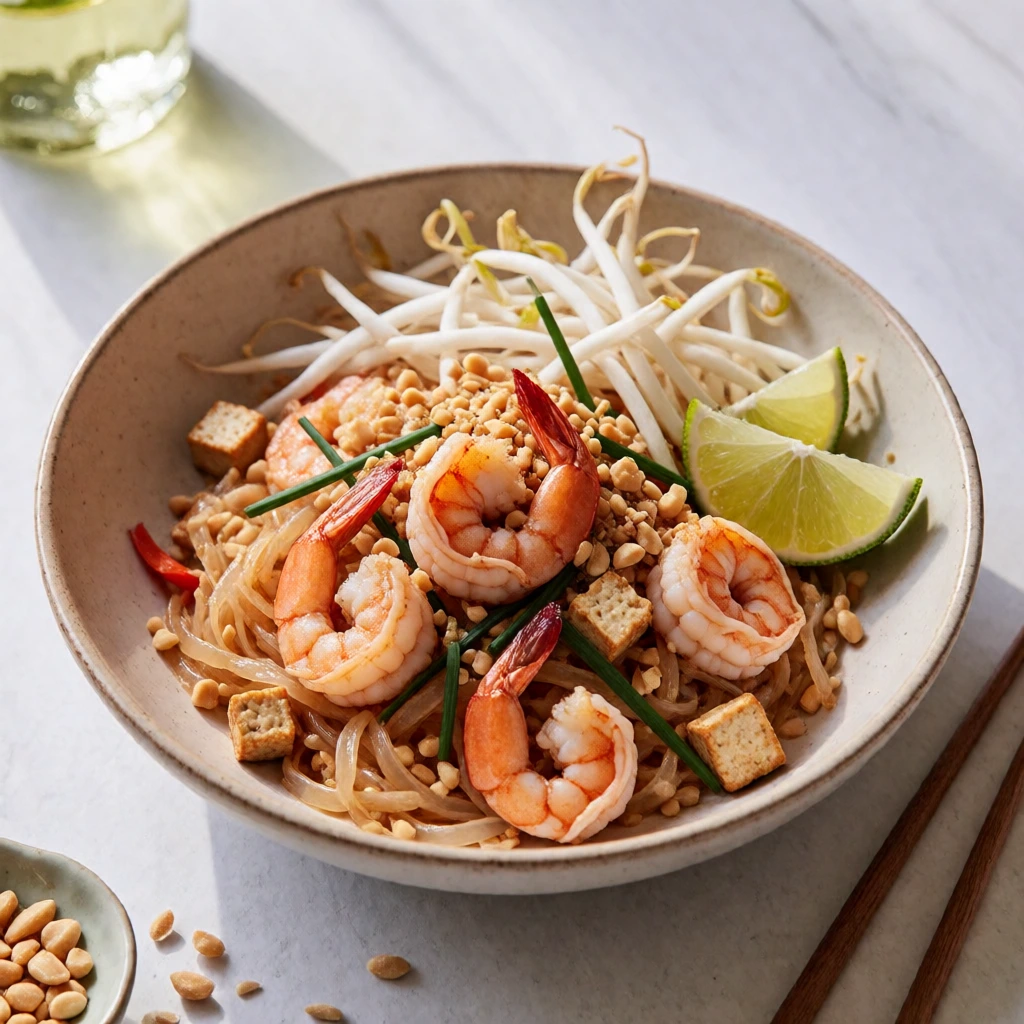
This Pad Thai brings together tender rice noodles, juicy shrimp, golden tofu, scrambled egg, crunchy bean sprouts, and fragrant garlic chives in one irresistible dish. The tamarind-based sauce creates a beautiful balance of sweet, savory, tangy, and slightly smoky flavors, while crushed roasted peanuts and fresh lime add texture and brightness to every bite.
Perfect for a quick weeknight dinner, this homemade Thai favorite comes together in about 30 minutes and is easy to customize with your favorite protein or vegetables. Serve it straight from the wok with extra peanuts, lime wedges, and chili flakes for a colorful restaurant-style presentation that makes an everyday meal feel special.
Ingredients:
- 6 oz medium Pad Thai rice noodles
- 8 oz shrimp, peeled and deveined
- 1 teaspoon Thai soy sauce
- 1 teaspoon fish sauce
- 3 tablespoons tamarind pulp
- 1/4 cup boiling water
- 1/4 cup brown sugar or palm sugar
- 2 tablespoons fish sauce
- 2 tablespoons oyster sauce
- 4 cloves garlic, minced
- 1/3 cup shallots, finely minced
- 3 oz firm tofu, drained and thinly sliced
- 2 tablespoons dried shrimp
- 2 large eggs, whisked
- 2 cups bean sprouts
- 10 garlic chives, cut into 1-inch pieces
- 2 tablespoons roasted peanuts, crushed
- Cooking oil, as needed
- Lime wedges, for serving
- Dried chili flakes, for serving
Directions:
- Combine the tamarind pulp with the boiling water in a small bowl. Break it apart and press the mixture through a fine-mesh strainer to create a smooth tamarind puree.
- Place the shrimp in a small bowl and toss with the Thai soy sauce and fish sauce. Set aside briefly to marinate.
- In another bowl, combine the tamarind puree, brown sugar, fish sauce, and oyster sauce. Stir until the sauce is smooth and well combined.
- Bring a medium pot of water to a boil. Cook the rice noodles according to the package directions until just al dente. Drain well and set aside.
- Heat 1 tablespoon of cooking oil in a wok or large skillet over high heat. Add the shrimp and cook for about 2 minutes per side, until pink and cooked through. Remove the shrimp and set aside.
- Add 2 tablespoons of oil to the same wok and reduce the heat to medium. Sauté the garlic and shallots for about 2 minutes, until fragrant and lightly browned.
- Add the tofu and dried shrimp and toss with the aromatics for about 2 minutes.
- Push the mixture to one side of the wok. Add another tablespoon of oil and pour in the beaten eggs. Gently scramble for about 30 seconds.
- Add the cooked noodles and prepared sauce. Toss everything together gently until the noodles are evenly coated and the ingredients are well distributed.
- Turn off the heat and return the cooked shrimp to the wok. Add the bean sprouts, garlic chives, and crushed peanuts, then gently toss to combine.
- Serve immediately with additional crushed peanuts, fresh bean sprouts, lime wedges, and a sprinkle of chili flakes.
Prep Time: 10 minutes | Cooking Time: 20 minutes | Total Time: 30 minutes
Kcal: 436 kcal | Servings: 3 servings
Pad Thai: A Flavorful Thai Classic for Easy Homemade Meals
Pad Thai is one of Thailand’s most recognizable dishes, loved around the world for its irresistible combination of chewy rice noodles, savory ingredients, fresh vegetables, aromatic herbs, and a beautifully balanced sauce. This homemade version brings together tender shrimp, tofu, scrambled eggs, bean sprouts, garlic chives, roasted peanuts, and rice noodles coated in a sweet, tangy, salty tamarind-based sauce.
What makes Pad Thai particularly appealing is its balance. Rather than relying on one dominant flavor, the dish combines several contrasting tastes that complement one another. Tamarind provides acidity and depth, sugar adds sweetness, fish sauce contributes saltiness and umami, while fresh lime, crunchy peanuts, and vegetables provide brightness and texture.
Whether you’re preparing dinner for your family or simply craving your favorite Thai takeout, homemade Pad Thai is an excellent choice. It can be prepared relatively quickly, customized according to your preferences, and served as a satisfying main course.
What Is Pad Thai?
Pad Thai is a Thai stir-fried noodle dish traditionally made with rice noodles and a combination of savory, sweet, sour, and salty flavors. It is commonly associated with ingredients such as tamarind, fish sauce, eggs, tofu, bean sprouts, peanuts, and various proteins.
The dish is cooked quickly over relatively high heat, which helps create the characteristic texture and allows the ingredients to retain their individual flavors. Instead of becoming a soft, heavily sauced noodle dish, good Pad Thai has noodles that remain pleasantly chewy and ingredients that provide different textures in every bite.
Although Pad Thai is now served in Thai restaurants throughout the world, recipes can vary significantly. Some versions use shrimp, while others feature chicken, pork, beef, tofu, or vegetables. The amount of sweetness, sourness, spice, and saltiness can also differ according to regional traditions and personal preference.
Why Homemade Pad Thai Is Worth Making
There is something especially satisfying about preparing Pad Thai at home. Restaurant versions can be delicious, but making the dish yourself gives you control over the ingredients and flavor profile.
You can increase the amount of shrimp, add more vegetables, reduce the sweetness, or adjust the spice level according to your taste. It is also an excellent way to use ingredients that may already be available in your pantry or refrigerator.
Another advantage is speed. Once the ingredients are prepared, the actual cooking process moves quickly. This makes Pad Thai particularly suitable for busy weeknights when you want something more exciting than an ordinary pasta or rice dinner.
The combination of noodles, protein, eggs, vegetables, and toppings also makes the dish filling enough to serve as a complete meal.
The Flavor Profile of Pad Thai
One of the defining characteristics of Pad Thai is its carefully balanced flavor profile.
Sweet
Sugar helps soften the sharper flavors of tamarind and fish sauce. It also contributes to the slightly glossy appearance of the noodles as they cook.
Sour
Tamarind gives Pad Thai its distinctive tangy character. Fresh lime served alongside the finished dish adds another layer of acidity and freshness.
Salty and Savory
Fish sauce provides saltiness as well as deep umami flavor. This savory element helps bring the sweetness and acidity into balance.
Nutty
Roasted peanuts provide a pleasant crunch and a rich, nutty flavor. They also create an appealing contrast with the soft noodles.
Fresh
Bean sprouts and garlic chives contribute freshness and crunch. Fresh lime adds brightness that keeps the dish from feeling too heavy.
The Importance of Tamarind
Tamarind is one of the ingredients that gives traditional-style Pad Thai much of its recognizable character. Its flavor is naturally sweet and sour, with a deep fruity acidity that is difficult to reproduce perfectly with ordinary vinegar or citrus juice alone.
Using tamarind helps create a sauce with more complexity. Instead of tasting simply sweet and sour, the sauce has a deeper, more rounded flavor that works particularly well with shrimp and rice noodles.
If you’re making Pad Thai for the first time, tamarind is an ingredient worth seeking out. Depending on where you live, it may be available as tamarind pulp, concentrate, paste, or another prepared form. The strength can vary between products, so adjustments may be necessary when preparing the sauce.
Why Rice Noodles Work So Well
Rice noodles are essential to the characteristic texture of Pad Thai. They are naturally gluten-free when produced without wheat-containing ingredients and have a soft yet pleasantly chewy texture when prepared correctly.
One of the most important considerations is avoiding overcooking the noodles before stir-frying. Rice noodles continue to soften as they absorb the sauce in the pan. Starting with noodles that are already too soft can result in a mushy final dish.
Ideally, the noodles should be tender enough to bend but still have some firmness before they are combined with the sauce and other ingredients.
The Role of Shrimp
Shrimp is a particularly popular protein choice for Pad Thai because its naturally sweet flavor complements the sweet and tangy sauce.
When cooked properly, shrimp should be tender and juicy rather than rubbery. Cooking it separately before combining it with the noodles can make it easier to control the texture.
Shrimp also gives the finished dish a beautiful appearance. The pink-orange color contrasts nicely with the golden noodles, green chives, white bean sprouts, and crushed peanuts.
For those who prefer another protein, shrimp can be replaced with chicken, pork, beef, or additional tofu. A vegetarian version can also be prepared by using suitable plant-based alternatives to fish sauce and oyster sauce.
Tofu Adds Texture and Substance
Firm tofu is another important component because it contributes a mild flavor and a satisfying texture. When cut into small pieces and cooked until lightly golden, tofu can develop a pleasant exterior while remaining tender inside.
Tofu is especially useful in Pad Thai because it absorbs some of the surrounding flavors without overpowering the sauce.
Even when shrimp is the primary protein, tofu helps make the dish more substantial and adds another texture to the finished meal.
Eggs Make the Dish Richer
Eggs are commonly associated with Pad Thai and contribute both flavor and texture. Lightly scrambled eggs add soft, tender pieces throughout the noodles.
They also help make the dish feel more complete. The combination of egg, noodles, shrimp, tofu, and vegetables creates a satisfying meal without requiring a separate side dish.
Fresh Bean Sprouts for Crunch
Bean sprouts provide one of the most noticeable textural contrasts in Pad Thai. While the noodles are soft and chewy, the sprouts offer a crisp, juicy bite.
Adding them toward the end of cooking helps preserve some of their freshness and crunch. Extra bean sprouts can also be served alongside the finished noodles for an even fresher presentation.
Roasted Peanuts Complete the Dish
Crushed roasted peanuts are more than just a garnish. Their crunchy texture and toasted flavor provide an important contrast to the tender noodles.
For an especially appealing presentation, reserve some peanuts for sprinkling over each serving just before eating. This keeps them crunchy and allows their nutty aroma to remain noticeable.
People who enjoy stronger peanut flavor can add additional crushed peanuts according to taste.
How to Achieve Better Pad Thai Texture
Texture is just as important as flavor when preparing Pad Thai.
The noodles should be tender but not mushy. Shrimp should remain juicy. Tofu should have some texture rather than becoming completely soft. Bean sprouts should retain a little crunch, while the eggs should remain tender.
A large wok or wide skillet is helpful because it provides enough surface area for the ingredients to cook evenly. Overcrowding the pan can cause the ingredients to steam instead of stir-fry.
Preparing all of the ingredients before cooking is also important. Once the wok becomes hot, the cooking process moves quickly, so having everything measured, chopped, and ready makes the process much easier.
How to Customize Pad Thai
One of the best things about homemade Pad Thai is how adaptable it can be.
You can use chicken instead of shrimp, add extra tofu, or create a vegetable-heavy version with carrots, cabbage, bell peppers, mushrooms, or other suitable vegetables.
For people who enjoy spicy food, chili flakes can be added directly to the noodles or served at the table so everyone can control the heat.
The toppings can also be customized. Fresh lime, peanuts, bean sprouts, chili flakes, and additional herbs can all be adjusted according to personal preference.
Making Pad Thai Less Sweet
Some people prefer a more savory and tangy Pad Thai rather than a noticeably sweet version. If that’s your preference, the sweetness can be reduced while maintaining enough sugar to balance the tamarind and fish sauce.
It is generally better to adjust the sauce gradually rather than making a dramatic change. The goal is to maintain the characteristic sweet-sour-salty balance that makes Pad Thai distinctive.
Making a Vegetarian Version
Pad Thai can easily be adapted for vegetarian meals, although attention should be paid to traditional sauces because fish sauce and oyster sauce are not vegetarian.
Plant-based alternatives can be used to provide saltiness and umami. Additional tofu and vegetables can also replace the shrimp.
A vegetarian version can be just as satisfying when it includes a variety of textures, such as crispy tofu, crunchy bean sprouts, chewy rice noodles, and roasted peanuts.
Serving Suggestions
Pad Thai is best served immediately while the noodles are still warm and the toppings are fresh.
A simple presentation works beautifully. Place the noodles on a plate or shallow bowl and finish them with crushed roasted peanuts, bean sprouts, fresh lime wedges, and chili flakes.
For a restaurant-style appearance, arrange the shrimp where they can be clearly seen rather than mixing everything completely together. A lime wedge on the side adds both visual appeal and a practical finishing touch.
Because Pad Thai is already a complete meal, it generally does not require many side dishes. A light cucumber salad, fresh fruit, or another simple vegetable dish can complement it without overwhelming the main course.
Tips for Making Pad Thai Successfully
There are several small details that can make a major difference.
First, prepare everything before turning on the stove. This prevents ingredients from sitting too long while other components cook.
Second, pay close attention to noodle texture. Slightly firm noodles are preferable to noodles that are already completely soft.
Third, avoid excessive sauce. Pad Thai should be flavorful and glossy but not swimming in liquid.
Fourth, use enough heat to stir-fry efficiently while keeping a close eye on the ingredients. High heat helps create the characteristic stir-fried flavor.
Finally, taste and adjust when appropriate. Tamarind products and sauces vary in strength, so the ideal balance may require small adjustments.
Why Pad Thai Is Perfect for Weeknight Dinner
With its combination of carbohydrates, protein, vegetables, and flavorful toppings, Pad Thai makes a convenient all-in-one dinner.
The relatively quick cooking time is another major advantage. Once the ingredients are prepared, the dish can come together quickly, making it practical for busy evenings.
It is also a great family meal because everyone can customize their own serving. Some people may prefer extra lime, others may want more peanuts, while spice lovers can add plenty of chili flakes.
A Great Alternative to Takeout
Homemade Pad Thai offers the comforting flavors of restaurant-style Thai noodles while allowing you to control exactly what goes into your meal.
Instead of waiting for delivery, you can prepare a fresh wok of noodles and customize the flavor to your liking. Homemade cooking also allows you to adjust portions and use the protein and vegetables you enjoy most.
The result is a dish that feels special without requiring complicated cooking techniques.
Storage and Reheating
Pad Thai is best enjoyed immediately because rice noodles can change texture after refrigeration. However, leftovers can be stored in an airtight container in the refrigerator.
When reheating, a small amount of water can help loosen the noodles if they have become firm. Gentle reheating is preferable to excessive heat, which can make shrimp rubbery and noodles overly soft.
For the best texture, toppings such as peanuts, bean sprouts, and lime are ideally added after reheating rather than before storage.
Conclusion
Pad Thai is a wonderful example of how a relatively simple collection of ingredients can create an incredibly flavorful meal. Chewy rice noodles provide the foundation, while shrimp, tofu, eggs, bean sprouts, garlic chives, and peanuts contribute layers of texture and flavor.
The tamarind-based sauce is what brings everything together, creating the characteristic sweet, tangy, salty, and savory balance that makes Pad Thai so appealing.
Whether you’re already a fan of Thai cuisine or you’re trying homemade Pad Thai for the first time, this dish is a fantastic addition to a weeknight dinner rotation. It is flavorful, customizable, visually appealing, and quick enough for busy days.
Serve it hot with plenty of fresh lime, crunchy peanuts, bean sprouts, and chili flakes, and you’ll have a satisfying homemade meal that brings the vibrant flavors of Thai cuisine straight to your table.