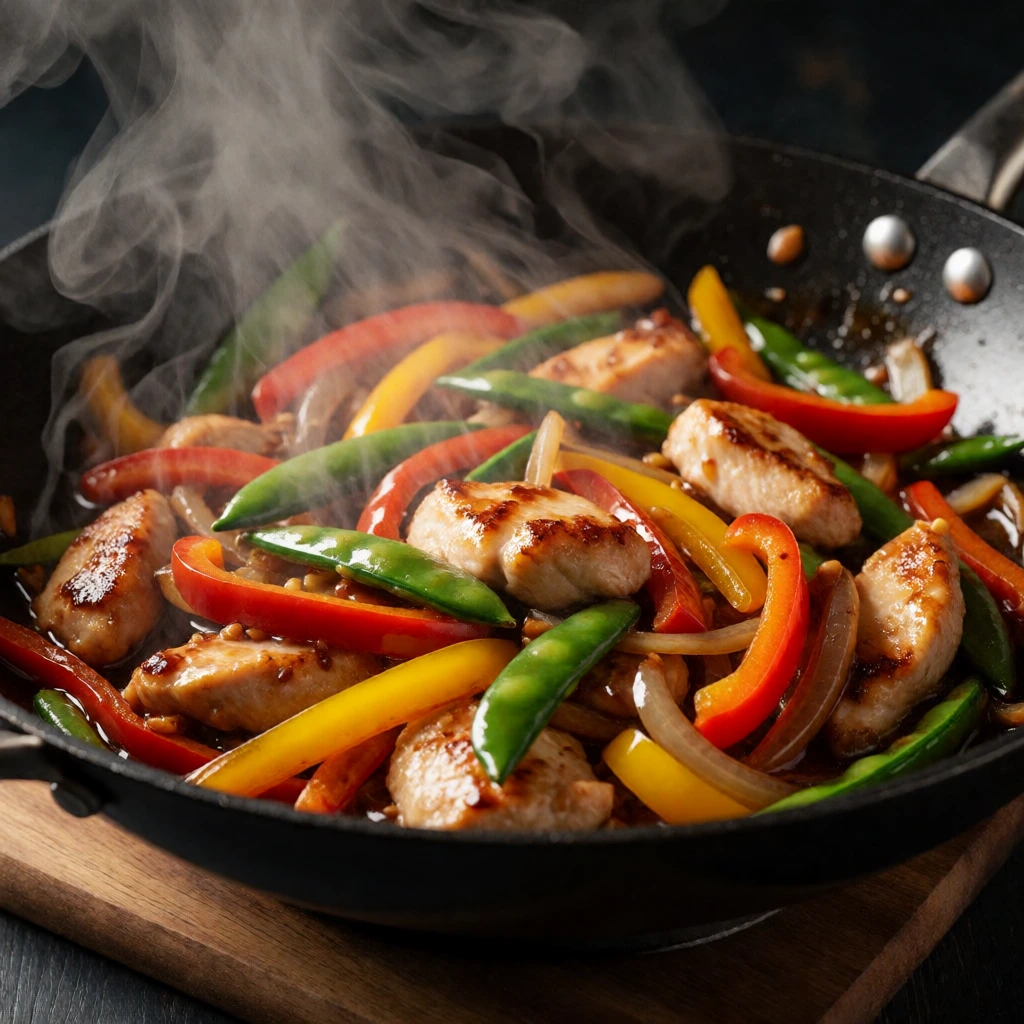
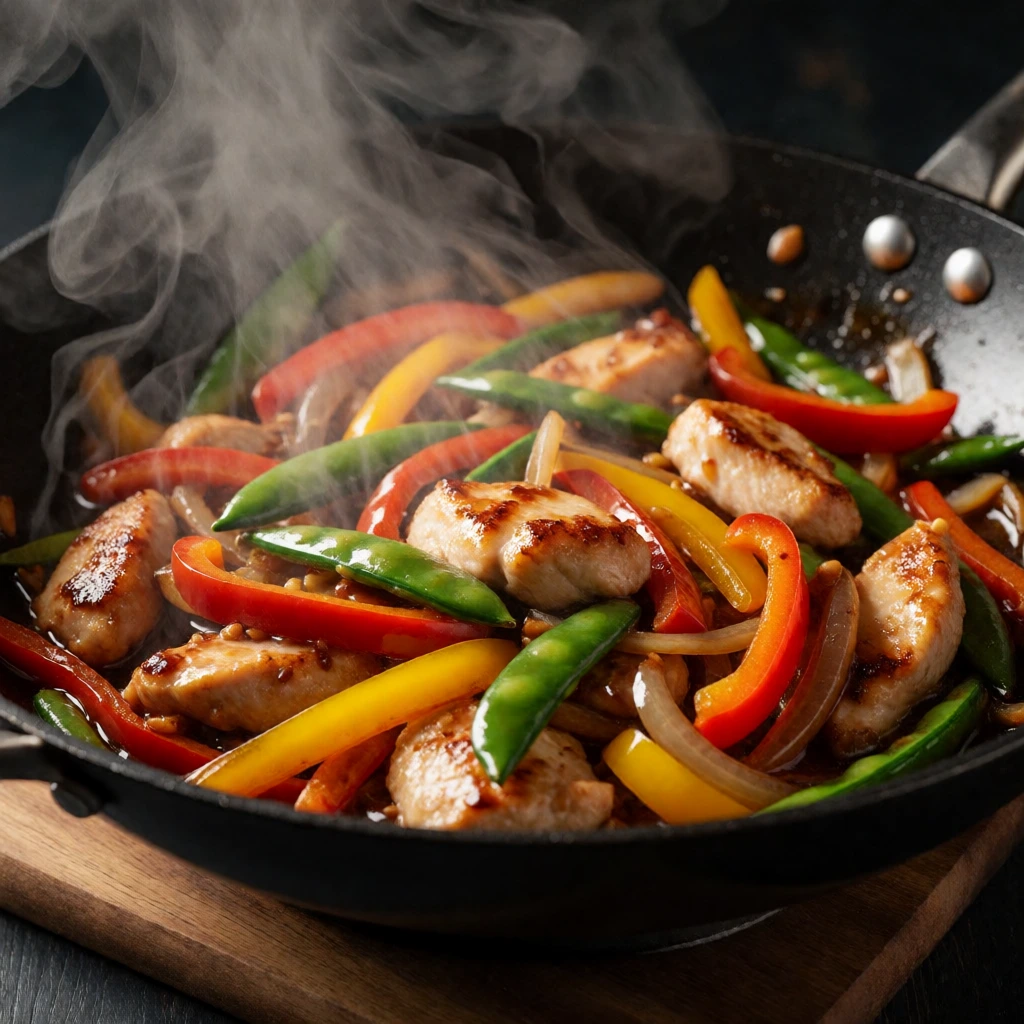
Stir-Fried Chinese Garlic Chicken is a wonderfully aromatic dish that brings together tender strips of chicken, crisp colorful vegetables, and a rich savory sauce in one fast and satisfying meal. The combination of freshly minced garlic, ginger, and chili flakes gives the dish its irresistible fragrance, while soy sauce, rice vinegar, brown sugar, and dark soy sauce create a beautifully balanced sweet, salty, tangy, and umami-rich glaze. The result is a glossy stir-fry that tastes wonderfully indulgent while remaining simple enough for an everyday dinner.
One of the best features of this dish is its contrast of textures. Thinly sliced chicken cooks quickly and stays tender, while snow peas, red onion, and bell pepper retain a pleasant crunch. Cooking everything over high heat helps preserve the fresh character of the vegetables while developing the bold flavors associated with wok-style cooking. Served over steamed jasmine rice, noodles, or another favorite grain, this Chinese-inspired chicken makes an excellent weeknight meal, meal-prep option, or homemade alternative to takeout.
Ingredients:
For the Chicken Marinade:
- 1 lb chicken breast tenders, cut into ½-inch-thin strips
- 1 teaspoon toasted sesame oil
- ¼ teaspoon ground white pepper
For the Stir-Fry:
- 2 tablespoons peanut oil or vegetable oil, divided
- 5–6 garlic cloves, minced
- 1 tablespoon freshly grated ginger
- 1 teaspoon red chili flakes
- ½ cup roughly chopped red onion
- 1 handful snow peas, trimmed
- ½ red bell pepper, thinly sliced
For the Sauce:
- 1 tablespoon rice vinegar
- 2 tablespoons low-sodium soy sauce
- 2 teaspoons dark soy sauce
- 2 teaspoons Chinese rice wine or dry sherry, optional
- ½ tablespoon brown sugar
- 2 teaspoons cornstarch
Directions:
- Marinate the chicken strips with sesame oil and white pepper for 10–15 minutes.
- In a small bowl, combine the rice vinegar, low-sodium soy sauce, dark soy sauce, Chinese rice wine or dry sherry, brown sugar, and cornstarch. Stir well and set aside.
- Heat 1 tablespoon of oil in a large wok over high heat. Add the chicken in a single layer and sear for about 1 minute without moving it.
- Stir-fry the chicken for another 2–3 minutes, or until just cooked through. Transfer the chicken to a plate and set aside.
- Add the remaining oil to the wok. Add the minced garlic, grated ginger, and red chili flakes, cooking briefly until fragrant. Be careful not to burn the garlic.
- Add the snow peas and red onion. Stir-fry over high heat for about 30 seconds.
- Add the sliced red bell pepper and continue cooking for about 1 minute, keeping the vegetables crisp-tender.
- Return the cooked chicken to the wok and pour in the prepared sauce.
- Toss everything together until the sauce thickens and creates a glossy coating around the chicken and vegetables. If the sauce becomes too thick, add 1–2 tablespoons of water.
- Cook for another 30 seconds, then remove from the heat and serve immediately with steamed rice.
Prep Time: 15 minutes | Cooking Time: 10 minutes | Total Time: 25 minutes
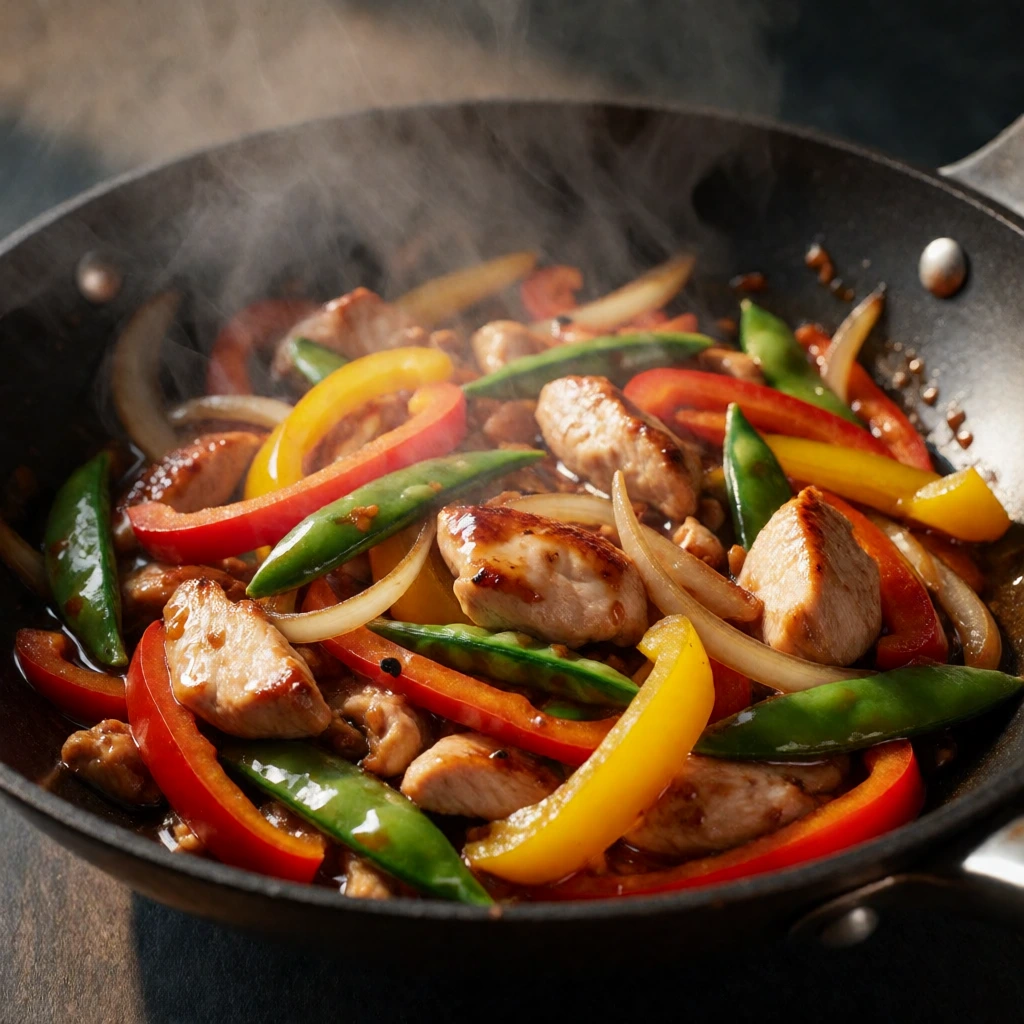
Stir-Fried Chinese Garlic Chicken: A Flavorful Homemade Takeout Favorite
Stir-Fried Chinese Garlic Chicken is the kind of meal that makes a busy weeknight feel a little easier. It combines tender chicken, crisp vegetables, aromatic garlic and ginger, and a glossy savory sauce in one flavorful dish. The cooking process is quick, the flavors are bold, and the finished meal pairs beautifully with steamed rice or noodles.
What makes this dish particularly appealing is the balance of flavors and textures. The chicken provides a tender and satisfying protein, while vegetables such as snow peas, red onion, and bell pepper add freshness and crunch. Garlic and ginger create an aromatic foundation, while soy sauce, rice vinegar, brown sugar, and dark soy sauce bring salty, sweet, tangy, and umami notes together.
Unlike complicated restaurant-style dishes that require a long list of specialized techniques, this chicken stir-fry is approachable enough for home cooks. It is also versatile, making it easy to adjust the vegetables, spice level, or serving style according to personal preference.
Why Stir-Fried Chinese Garlic Chicken Is So Popular
There is something especially satisfying about a homemade stir-fry. High-heat cooking gives the chicken and vegetables a lightly caramelized character while helping the vegetables maintain some of their natural crispness. At the same time, the sauce coats everything with a glossy layer of concentrated flavor.
Garlic is the star of this dish. Fresh garlic provides a much stronger and more aromatic flavor than dried garlic powder, particularly when it is briefly cooked in hot oil. Ginger complements the garlic with a warm, slightly peppery freshness, while chili flakes can add a gentle kick.
The sauce is another important part of the overall experience. Instead of tasting overwhelmingly salty or sweet, a properly balanced stir-fry sauce should have several layers of flavor. Soy sauce contributes saltiness and umami, rice vinegar provides acidity, brown sugar adds subtle sweetness, and dark soy sauce gives the finished dish a deeper color and richer appearance.
This combination makes the dish taste similar to the Chinese-inspired meals many people enjoy from restaurants, while allowing the cook to control the ingredients and seasoning at home.
What Makes the Chicken Tender and Flavorful?
The texture of the chicken is one of the most important aspects of a successful stir-fry. Thin strips of chicken are particularly suitable because they cook quickly and absorb the surrounding flavors.
Chicken breast can work especially well because it is lean and cooks rapidly, but it needs to be handled carefully. Overcooking can cause lean chicken to become dry or tough. Cooking it over high heat for a short period helps develop a flavorful exterior while keeping the interior tender.
A short marinade also contributes to the flavor. Sesame oil and white pepper provide subtle aromatic notes without overpowering the garlic-based sauce. Allowing the chicken to rest briefly before cooking gives those flavors an opportunity to coat the meat.
The chicken should ideally be cooked just until done rather than left in the wok for an unnecessarily long time. Since the pieces are thin, they require much less cooking time than larger cuts.
The Importance of Fresh Garlic
Fresh garlic gives this dish much of its personality. When garlic is briefly cooked in hot oil, its natural aromas are released and spread throughout the wok.
However, garlic can burn quickly, especially when cooking over high heat. Burnt garlic becomes bitter, which can negatively affect the entire dish. For that reason, it is best to keep a close eye on the garlic and avoid leaving it unattended in a very hot wok.
Freshly minced garlic generally gives the strongest result. The amount can also be adjusted according to preference. Garlic lovers can increase it for a more intense flavor, while those who prefer a gentler profile can reduce it slightly.
The combination of garlic and fresh ginger is particularly effective because the two ingredients complement one another. Garlic contributes savory intensity, while ginger adds brightness and warmth.
Choosing the Right Vegetables
Vegetables provide more than color. They also create an important contrast with the tender chicken and rich sauce.
Snow peas are an excellent choice because they remain pleasantly crisp when quickly stir-fried. Red bell pepper adds natural sweetness, color, and a slightly juicy texture. Red onion contributes additional sweetness and becomes tender while retaining some bite.
One of the advantages of making stir-fry at home is that the vegetables can easily be customized. Broccoli, carrots, baby corn, mushrooms, cabbage, bok choy, green beans, or sliced zucchini can all work well in a similar dish.
The main goal is to choose vegetables that can tolerate high-heat cooking without becoming excessively soft. A good stir-fry should generally have a mixture of textures rather than vegetables that are all cooked until tender.
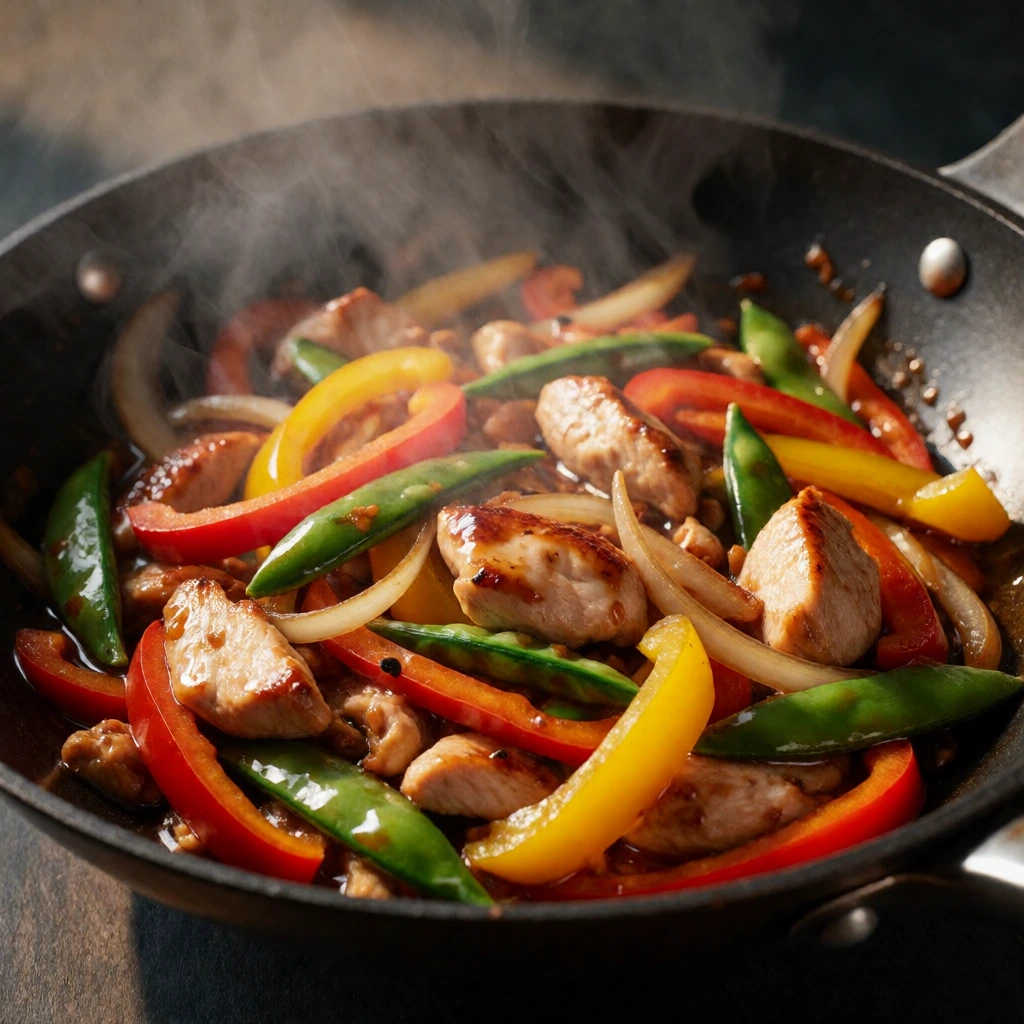
Understanding the Sauce
The sauce is what brings all of the components together. A successful stir-fry sauce should complement the chicken and vegetables rather than completely cover their individual flavors.
Soy sauce provides the main savory foundation. Dark soy sauce contributes deeper color and a slightly richer character. Rice vinegar introduces acidity, which helps balance the saltiness and sweetness.
A small amount of brown sugar rounds out the sauce. It should not make the dish taste like a sweet sauce; instead, it helps create a balanced flavor profile and encourages a glossy finish.
Cornstarch plays an important textural role. When heated with liquid, it thickens the sauce and allows it to cling to the chicken and vegetables. This creates the characteristic glossy coating associated with many stir-fried dishes.
The amount of sauce can also be adjusted. If you prefer a lighter stir-fry, use less sauce. For a saucier meal served over rice, slightly more sauce can be desirable.
Why High-Heat Cooking Works So Well
Stir-frying is traditionally associated with fast cooking over relatively high heat. This method is particularly useful because it allows ingredients to cook quickly while preserving texture.
A hot wok or large skillet helps the chicken develop color instead of simply steaming. It also allows vegetables to cook rapidly while maintaining some crispness.
Overcrowding the cooking surface can make it difficult to achieve this effect. When too much food is placed in a pan at once, the temperature can drop significantly, and the ingredients may release moisture. Instead of developing a lightly browned exterior, they may simmer in their own juices.
Cooking the chicken separately before combining it with the vegetables is therefore useful. It gives the chicken an opportunity to sear properly while allowing the vegetables to cook quickly afterward.
Wok or Skillet: Which Is Better?
A traditional wok is ideal for stir-frying because its shape provides different heat zones and makes tossing ingredients easier. However, a large skillet can also produce excellent results.
For home cooks without a wok, a wide, heavy-bottomed skillet is a practical alternative. The most important consideration is providing enough surface area for the ingredients.
Whatever pan you choose, avoid adding too much food at once. If necessary, cook in batches. This is especially helpful when preparing larger quantities because it prevents the chicken from becoming crowded and steamed.
How Spicy Is This Dish?
The level of heat is easy to customize. Red chili flakes provide a straightforward way to add spice without changing the basic character of the sauce.
For a mild version, use only a small pinch or leave the chili flakes out completely. For more heat, increase the amount gradually.
You can also experiment with other chili ingredients, although this may change the overall flavor. Fresh sliced chilies can provide a brighter heat, while chili oil can add both spice and richness.
The garlic and ginger remain the dominant flavors, so the heat should ideally support those ingredients rather than overpower them.
Best Ways to Serve Chinese Garlic Chicken
Steamed white rice is one of the simplest and most popular accompaniments. Jasmine rice is particularly pleasant because its subtle fragrance works well with the savory sauce.
Brown rice can be used for a heartier option, while noodles can turn the stir-fry into a complete noodle bowl. Egg noodles, rice noodles, or other Asian-style noodles can all be suitable depending on personal preference.
For a lower-carbohydrate serving option, the chicken can be paired with cauliflower rice or additional steamed vegetables.
The dish can also be presented family-style on a large serving platter. Garnishing with sliced green onions, sesame seeds, or a small amount of fresh chili can provide an attractive finishing touch.
Tips for Getting Restaurant-Style Results at Home
One of the biggest secrets to excellent stir-fry is preparation. Because the cooking happens quickly, it is useful to have everything ready before turning on the heat.
Chicken should be sliced before cooking, vegetables should be prepared, and the sauce should already be mixed. Once the pan becomes hot, there is little time to stop and measure ingredients.
Another important tip is to avoid overcooking the vegetables. Crisp-tender vegetables provide much better contrast against the soft chicken and glossy sauce.
It is also important to use enough heat. Stir-frying at low heat can result in pale, watery food. High heat encourages quick cooking and helps develop the characteristic flavors of the dish.
Finally, taste the finished sauce before serving when possible. Depending on the soy sauce used, you may find that the seasoning is already sufficient. Different soy sauces vary considerably in saltiness, so adjustments should always be made according to taste.
Easy Variations to Try
This recipe is flexible enough to become several different meals.
For a vegetable-heavy version, increase the amount and variety of vegetables. Broccoli, carrots, mushrooms, cabbage, and bok choy are particularly good choices.
For a spicy garlic chicken version, increase the chili flakes or add fresh chili peppers.
For a richer dish, a small amount of additional toasted sesame oil can be added toward the end of cooking. Sesame oil is quite aromatic, so a little goes a long way.
You can also replace chicken breast with boneless chicken thighs. Thigh meat is naturally more forgiving and tends to remain juicy because it contains more fat.
For a different protein, similar flavors can be used with shrimp, thinly sliced beef, or pork, although cooking times will vary.
Making It Suitable for Meal Prep
Stir-Fried Chinese Garlic Chicken can be useful for meal preparation because it reheats relatively quickly.
For the best texture, store the chicken and vegetables in airtight containers and refrigerate them promptly after cooling. Rice should also be stored properly and refrigerated rather than left at room temperature for extended periods.
When reheating, use a skillet or microwave until the food is thoroughly hot. A small splash of water can help loosen the sauce if it becomes thick after refrigeration.
The vegetables may soften slightly after reheating, so if you are specifically preparing the dish for several days of meals, consider keeping the vegetables slightly crisp during the initial cooking.
Storage and Leftovers
Leftover chicken stir-fry should be stored in a sealed container in the refrigerator. It is best enjoyed within a few days and should be reheated thoroughly before serving.
The sauce may become thicker after refrigeration because of the cornstarch. This is normal. Adding a small amount of water while reheating can restore a smoother consistency.
If you plan to freeze the dish, keep in mind that the vegetables may lose some of their original crispness after thawing and reheating. For the best texture, fresh vegetables are preferable, but frozen leftovers can still provide a convenient meal.
Common Mistakes to Avoid
One common mistake is overcrowding the pan. Too many ingredients can lower the cooking temperature and prevent proper browning.
Another mistake is adding garlic too early and allowing it to burn. Garlic cooks very quickly, so it should be watched carefully.
Using overly thick pieces of chicken can also create uneven cooking. Thin, similarly sized strips are preferable because they cook at approximately the same rate.
Adding too much sauce is another potential issue. The goal is to coat the chicken and vegetables rather than submerge them completely.
Finally, avoid cooking the vegetables until they become completely soft. A little crunch is part of what makes a good stir-fry enjoyable.
Why This Makes an Excellent Weeknight Dinner
Busy evenings often call for meals that do not require hours of preparation. This dish fits that need particularly well.
The combination of protein, vegetables, and a flavorful sauce means that it can function as a complete meal when served with rice or noodles. It also uses a cooking method that is naturally fast.
The bold garlic flavor makes the meal feel more substantial than its short preparation time might suggest. Because the vegetables cook quickly, the dish can go from kitchen to table without requiring complicated techniques.
It is also family-friendly because the spice level can easily be adjusted. Those who enjoy heat can add extra chili, while those who prefer mild flavors can leave it out.
A Great Homemade Alternative to Takeout
Ordering Chinese-inspired takeout can be convenient, but preparing a similar meal at home offers several advantages. You can control the amount of sauce, adjust the seasoning, choose your favorite vegetables, and determine the level of spice.
Homemade cooking also allows you to prepare the dish exactly the way you prefer. Some people may want extra garlic, while others may prefer more vegetables or a lighter sauce.
The result is a meal that feels comforting and familiar while still being customized to your household’s preferences.
Conclusion
Stir-Fried Chinese Garlic Chicken is a flavorful, flexible, and approachable meal that deserves a place in any weeknight dinner rotation. Its appeal comes from the combination of tender chicken, crisp vegetables, aromatic garlic and ginger, and a balanced sauce that brings everything together.
The dish is quick enough for busy evenings but flavorful enough to serve when you want something that feels special. Its ingredients can be adapted, the spice level can be changed, and the serving options are practically endless.
Whether served with fragrant jasmine rice, noodles, or a simple side of vegetables, this Chinese-inspired chicken stir-fry delivers the satisfying combination of savory flavor, fresh texture, and aromatic garlic that makes homemade Asian-style cooking so enjoyable.
Once you become comfortable with the basic concept, it is easy to make the dish your own. Experiment with different vegetables, adjust the sauce to your preference, and choose your favorite protein. The beauty of stir-frying is that it provides a simple foundation for creating countless delicious meals while keeping the cooking process quick and uncomplicated.