
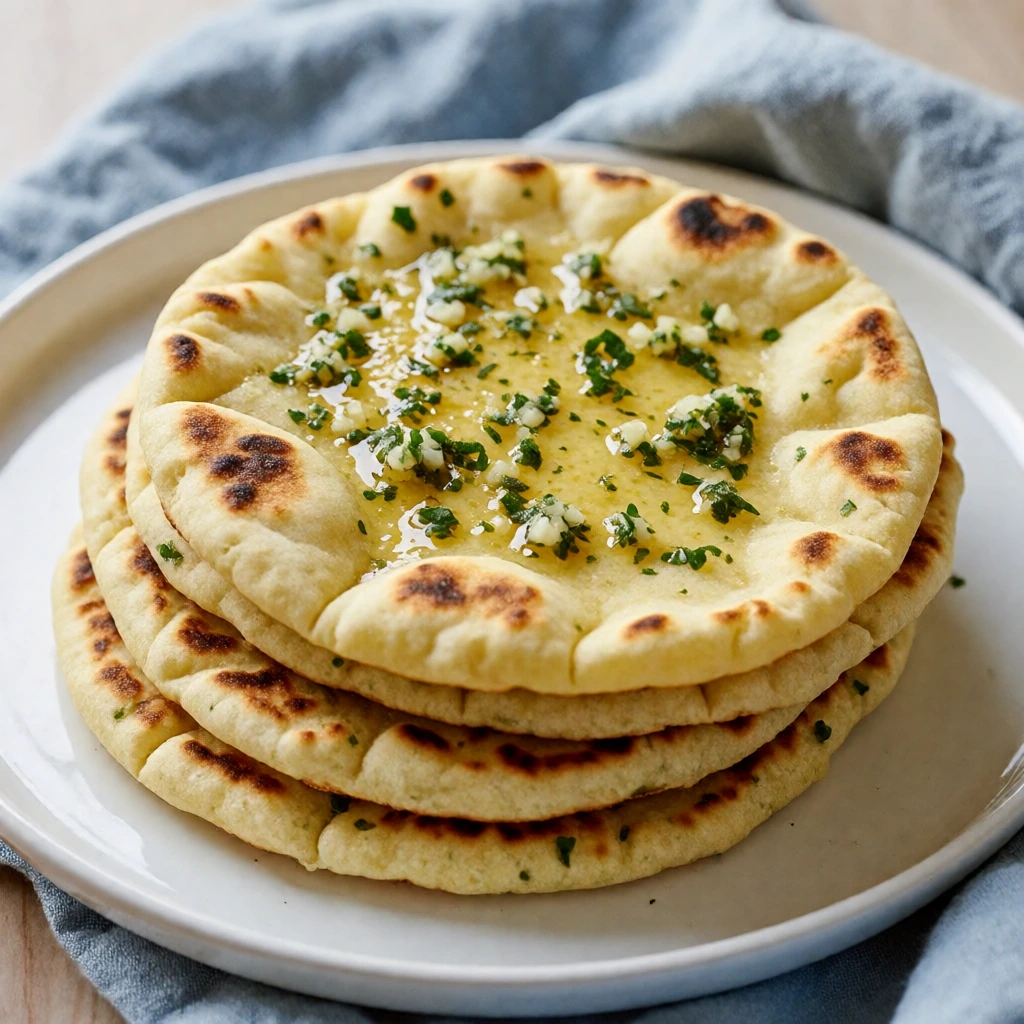
There is something especially satisfying about homemade pita bread when it comes straight from the skillet warm, soft, and lightly golden. This garlic version takes that classic homemade bread and gives it an extra layer of flavor with a rich mixture of melted butter, fresh minced garlic, and fragrant parsley. The finished pitas are wonderfully tender inside with lightly toasted surfaces that make them ideal for tearing, dipping, or filling.
These garlic pitas are also incredibly versatile and can become part of almost any meal. Serve them alongside hummus, tzatziki, grilled chicken, Greek meatballs, roasted vegetables, or fresh salads for a Mediterranean-inspired spread. They can also be sliced into wedges and crisped into homemade pita chips or used as a base for wraps and quick flatbread-style meals. The dough can be prepared ahead and refrigerated after rising, while cooked pitas can be stored for several days or frozen for longer-term enjoyment.
Ingredients:
- 1 1/2 cups all-purpose flour
- 1 teaspoon salt
- 1 tablespoon active dry yeast
- 1/3 cup milk, warmed
- 1/3 cup warm water
- 2 tablespoons olive oil
- 1/2 cup butter
- 5 cloves garlic, minced
- 2 tablespoons fresh parsley, finely chopped
- Additional flour for rolling
- A small amount of olive oil for cooking
Directions:
- Combine the flour, salt, and active dry yeast in a large mixing bowl and whisk until evenly distributed.
- Add the warm milk and warm water to the dry ingredients. Stir until a shaggy dough forms.
- Add the olive oil and knead the dough with your hands until all of the loose flour is incorporated and the dough comes together.
- Cover the bowl with plastic wrap and place a clean kitchen towel over it. Let the dough rest and rise for approximately 1 hour.
- Lightly flour a clean work surface and transfer the dough onto it. Gently flatten the dough into a round shape.
- Divide the dough into 6 equal portions. Shape each portion into a smooth ball and keep the dough balls covered with a clean towel while working.
- Roll each dough ball on a lightly floured surface until it forms a round pita approximately 1/4 inch thick.
- Heat a large skillet or pan over medium-high heat and lightly coat it with olive oil. Place one pita in the hot pan and cook until bubbles begin to form, about 30 seconds.
- Flip the pita and cook for 1–2 minutes, or until golden-brown spots appear on the underside. Flip once more and cook for another 1–2 minutes until both sides are evenly cooked.
- Transfer the cooked pita to a plate and cover it with a clean kitchen towel to help maintain its softness. Repeat with the remaining dough.
- Melt the butter in a microwave-safe bowl for about 30 seconds. Stir in the minced garlic and chopped fresh parsley.
- Brush or spread the garlic butter mixture generously over each warm pita. Serve immediately or allow them to cool before storing.
Prep Time: 1 hour 15 minutes | Cooking Time: 15 minutes | Total Time: 1 hour 30 minutes
Kcal: 290 kcal | Servings: 6 pitas
Easy Garlic Pita Bread From Scratch: Soft, Flavorful, and Perfect for Every Meal
There is something special about making bread at home, especially when the finished result is soft, warm, and filled with the comforting aroma of garlic and butter. Easy Garlic Pita Bread is a wonderful homemade bread option for anyone who wants to bring fresh, bakery-style flavor to the table without complicated equipment or advanced baking skills.
Unlike many traditional breads that require a long baking process, pita bread can be prepared and cooked relatively quickly on a hot skillet. The result is a tender flatbread with a lightly golden exterior and a soft interior that works beautifully with a wide variety of meals. Adding garlic butter and fresh parsley takes the basic pita to another level, giving it a savory, aromatic finish that makes it difficult to stop at just one piece.
This homemade pita is versatile enough for breakfast, lunch, dinner, snacks, parties, and casual family meals. It can be served warm alongside dips, used as a wrap, paired with grilled foods, or transformed into crispy pita chips. Once you learn how easy it is to make, you may find yourself choosing homemade pita over packaged bread whenever you have the time.
What Makes Garlic Pita Bread So Delicious?
The appeal of this pita comes from the combination of a soft, chewy bread and a flavorful garlic-butter topping. The pita itself has a mild taste, which allows the garlic, butter, and herbs to stand out without becoming overwhelming.
Fresh garlic provides a savory, slightly spicy character, while melted butter adds richness and a smooth finish. Fresh parsley contributes a mild herbal note that balances the richness of the butter. Together, these flavors create a simple but satisfying bread that pairs well with both light and hearty dishes.
Another appealing quality is the contrast in texture. The outside develops attractive golden spots as the pita cooks, while the inside remains soft and flexible. When served warm, the bread is especially enjoyable because the garlic butter melts into the surface and enhances every bite.
A Great Introduction to Homemade Bread
If you are new to bread making, homemade pita is a good recipe to try. It does not require shaping an elaborate loaf or managing a complicated oven-baking process. The dough is relatively simple, and the individual portions are easy to handle.
Pita is also forgiving in appearance. Each piece does not have to be perfectly round or identical. Slight differences in shape can actually make homemade pita look more rustic and authentic.
Working with yeast may seem intimidating at first, but pita provides an approachable way to become familiar with yeast-based dough. You can learn how dough changes as it rests, how kneading affects texture, and how heat transforms a simple dough into a soft flatbread.
The Importance of Soft and Flexible Dough
One of the keys to enjoyable pita bread is achieving a dough that is soft and flexible rather than excessively dry. Too much flour can make the finished bread dense and tough, while a properly hydrated dough produces a more tender texture.
When handling the dough, avoid adding large amounts of flour simply because the dough feels slightly sticky. A little stickiness can be normal. Using lightly floured hands and a lightly floured work surface can make the dough easier to manage without drying it out.
The final texture is influenced by several factors, including flour, hydration, kneading, resting time, and cooking temperature. Small differences in kitchen conditions can affect dough consistency, so learning to judge the texture of the dough is often more useful than relying only on measurements.
Why Resting the Dough Matters
Resting is an important part of creating good pita bread. During the resting period, the yeast helps the dough develop, while the gluten structure relaxes. This makes the dough easier to roll and helps create a more tender finished product.
Trying to rush this stage can result in dough that is difficult to shape or pita that does not achieve the desired texture. Giving the dough enough time to rest is one of the simplest ways to improve homemade bread.
The resting environment can also influence the process. A comfortably warm area generally encourages yeast activity, while a particularly cold kitchen may require additional time.
Getting the Right Pita Thickness
Thickness is another important factor. If the dough is rolled too thick, the pita may cook unevenly and become more bread-like. If it is rolled excessively thin, it may become crisp rather than soft and flexible.
A moderate, even thickness is ideal for a pita that can be folded, wrapped, or torn apart for dipping. Try to maintain relatively consistent thickness from the center toward the edges.
The more evenly the dough is rolled, the more evenly it will cook. This is particularly important when preparing several pitas at once.
How to Encourage Soft, Puffy Pitas
One of the most enjoyable characteristics of pita bread is the possibility of creating a pocket inside. The pocket forms when moisture in the dough turns into steam during cooking and separates the layers.
Several factors can influence whether a pita puffs. Even rolling, suitable dough hydration, proper resting, and a sufficiently hot cooking surface all play a role.
Not every homemade pita will puff perfectly every time, and that does not mean the bread has failed. A pita that does not develop a large pocket can still be soft, flavorful, and delicious.
The important thing is to avoid becoming discouraged by appearance. Homemade bread can vary from one batch to another, particularly when you are still learning how your skillet, stove, and dough behave.
Choosing the Right Cooking Surface
A large skillet or heavy-bottomed pan works well for homemade pita. The cooking surface should be capable of maintaining consistent heat so the bread develops golden spots without burning.
A pan that is not hot enough may cause the dough to cook slowly and become dry. On the other hand, excessive heat can burn the exterior before the interior is properly cooked.
Finding the right temperature may take a little experimentation. Once you learn how quickly your pita develops bubbles and golden marks, you can adjust the heat as necessary.
The Garlic Butter Makes the Difference
Although pita bread is delicious on its own, the garlic butter topping gives this version its distinctive character.
The combination of butter, garlic, and parsley creates a fragrant topping that complements the mild flavor of the bread. For the best experience, the garlic butter is particularly enjoyable when spread over warm pita so it can melt into the surface.
You can adjust the intensity according to your preferences. If you love garlic, a stronger garlic flavor works beautifully. If you prefer something more subtle, use a lighter hand with the garlic.
Fresh parsley provides color as well as flavor, making the finished bread look more appealing when served on a platter.
What to Serve With Garlic Pita Bread
The versatility of garlic pita makes it an excellent accompaniment for many dishes.
For a Mediterranean-inspired meal, serve it with hummus, tzatziki, baba ganoush, olives, cucumber, tomatoes, and grilled vegetables. It also works beautifully with chicken, beef, lamb, or seafood.
Garlic pita can also accompany soups and stews. Its soft texture makes it useful for soaking up flavorful sauces and broths.
For a simple lunch, use the pita as a wrap with grilled chicken, lettuce, tomatoes, cucumber, onions, and your favorite sauce. It can also be filled with falafel, roasted vegetables, or other savory fillings.
Turning Pita Into a Snack
Garlic pita is not limited to mealtime. It can easily become a satisfying snack.
Warm pieces can be served with hummus or other dips. For a crispier option, pita can be cut into wedges and toasted until crunchy. Homemade pita chips are especially delicious when seasoned with herbs and spices.
You can also cut warm pita into strips and serve them alongside creamy dips at gatherings. The combination of crispy edges and garlicky flavor makes them an easy crowd-pleasing appetizer.
Ways to Customize the Flavor
One advantage of homemade pita is how easily the flavor can be changed.
For an herb-forward version, experiment with parsley, oregano, thyme, rosemary, or a combination of fresh herbs. A little dried Italian seasoning can also create a different flavor profile.
For extra savory flavor, a small amount of grated Parmesan can be incorporated into the garlic topping. A sprinkle of sesame seeds can provide additional texture.
If you enjoy spicy foods, crushed red pepper flakes can be added to the garlic butter. Smoked paprika can provide a subtle smoky note, while freshly ground black pepper gives the bread a little extra bite.
These variations allow the same basic pita to complement different meals.
Making the Pita Ahead of Time
Homemade pita can be useful for meal preparation because it can be made ahead of time.
Once cooked, allow the pitas to cool appropriately before storing them. Keeping them covered helps prevent them from becoming unnecessarily dry.
If you are preparing them for a meal later in the day, they can be gently reheated before serving. Warm pita is generally softer and more enjoyable than pita served cold.
For busy households, preparing a batch in advance can make future meals much easier. Having homemade flatbread ready in the kitchen means you can quickly create wraps, sandwiches, dipping platters, or simple side dishes.
How to Store Homemade Garlic Pita
Proper storage helps maintain the bread’s softness. Once completely cooled, the pitas can be placed in an airtight container or sealed storage bag.
For short-term storage, keep them at room temperature in a cool, dry location. If you need to keep them longer, freezing is a practical option.
When freezing homemade pita, separate individual pieces with suitable layers so they are easier to remove one at a time. After thawing, gently reheating the bread can help restore its softness.
Because homemade bread does not contain the same preservatives as many commercially produced breads, it is best enjoyed while fresh.
How to Reheat Garlic Pita
Reheating pita gently is important because excessive heat can make it dry or tough.
A skillet can be used to warm the bread for a short period. The microwave can also work for quick reheating, particularly when the pita is covered appropriately to help retain moisture.
The goal is simply to warm the bread rather than cook it again. Once heated, the pita should be soft and flexible.
If the bread seems slightly dry, serving it with hummus, yogurt-based sauces, or another moist accompaniment can make it more enjoyable.
Common Mistakes to Avoid
One common mistake when making homemade pita is adding too much flour. While flour makes dough easier to handle, excessive amounts can lead to dense bread.
Another issue is cooking on a surface that is too cool. Pita benefits from a properly heated pan, allowing it to develop characteristic golden spots while remaining tender.
Rolling the dough unevenly can also cause inconsistent cooking. Try to create pieces with relatively even thickness.
Finally, avoid overcrowding the pan. Cooking one pita at a time or leaving sufficient room between pieces makes it easier to monitor the bread and flip it at the right moment.
Why Homemade Pita Is Worth Making
Store-bought pita is convenient, but homemade pita offers something different. You control the freshness, texture, and flavor. The bread can be served warm directly from the skillet, and the garlic topping can be customized to suit your preferences.
There is also something rewarding about making bread from scratch. The process transforms a handful of basic pantry ingredients into something warm and comforting that can be shared with family and friends.
Homemade pita can also be more versatile than people expect. It can function as a side dish, wrap, appetizer, snack, dipping bread, or even the foundation for other meals.
Perfect for Family Meals and Gatherings
Garlic pita is an excellent choice when entertaining because it can be served as part of a larger spread.
Arrange warm pitas on a large serving platter alongside several dips, fresh vegetables, olives, grilled meats, and salads. The combination creates an inviting meal where everyone can assemble their own plate.
For casual gatherings, cut the pitas into smaller pieces and serve them with hummus or a creamy dip. The garlic aroma can make the entire kitchen feel warm and welcoming.
This is also a family-friendly option because everyone can choose how they want to enjoy the bread.
A Budget-Friendly Homemade Side
Another reason to love this recipe is its simplicity. Homemade bread can be an economical addition to meals, particularly when you already have basic baking staples at home.
Instead of purchasing separate bread products for wraps, dipping, or serving with dinner, one batch of pita can cover several purposes.
The ability to transform one simple bread into multiple meals makes it especially useful for practical home cooking.
Conclusion
Easy Garlic Pita Bread is a wonderful example of how simple homemade cooking can produce something incredibly satisfying. The soft flatbread, lightly golden surface, buttery garlic topping, and fresh parsley come together to create a versatile addition to almost any meal.
Whether you serve it with hummus and dips, use it to make wraps, pair it with grilled foods, or simply enjoy it warm from the skillet, this garlic pita is sure to become a useful recipe in your kitchen.
The recipe is also an excellent introduction to homemade yeast bread because it offers a straightforward way to practice working with dough without requiring complicated equipment or elaborate shaping techniques. Once you become comfortable with the process, you can experiment with different herbs, seasonings, toppings, and serving ideas.
Most importantly, don’t worry if your homemade pitas are not perfectly identical. Slight variations are part of the charm of cooking from scratch. What matters is creating bread that is warm, flavorful, soft, and enjoyable.
With its versatility, comforting garlic flavor, and homemade appeal, Easy Garlic Pita Bread is a recipe worth keeping close. It can turn an ordinary meal into something special and give even a simple dinner the feeling of a freshly prepared feast.