
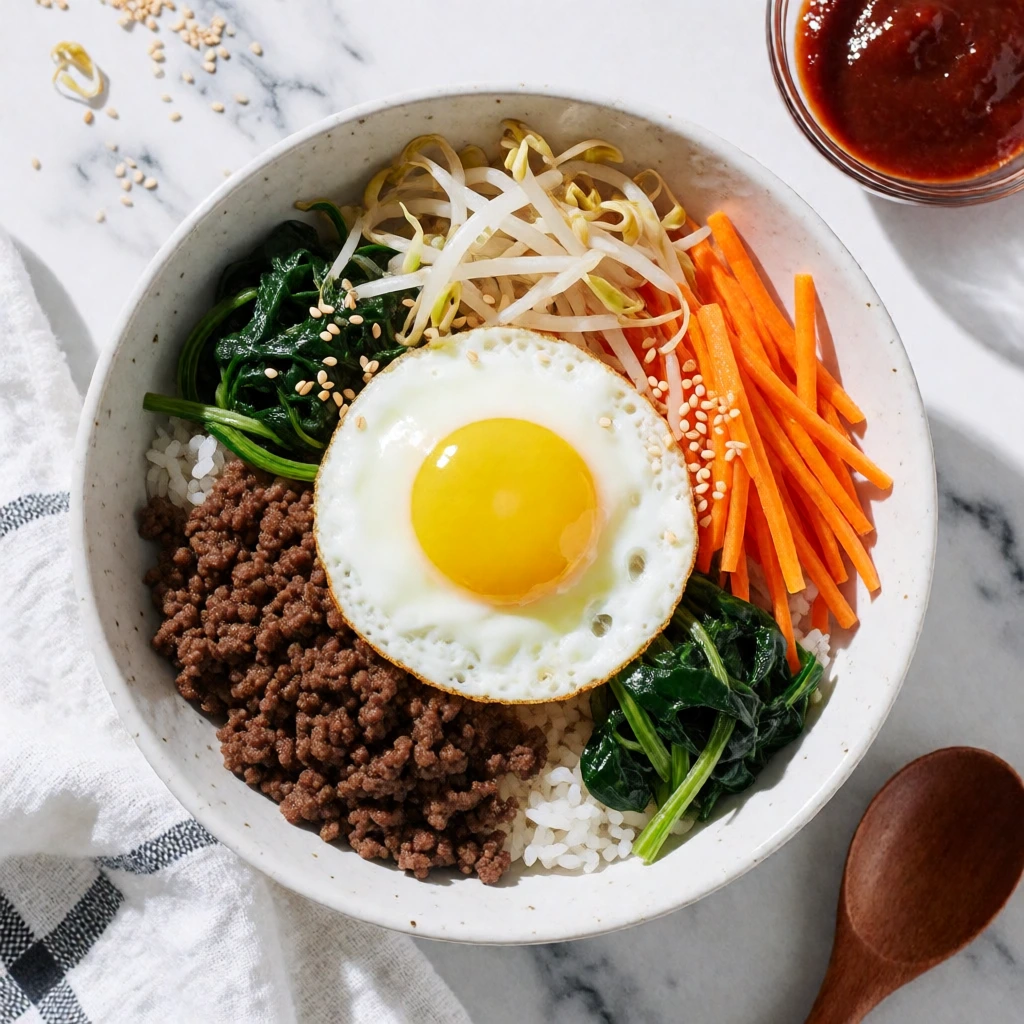
This Easy Bibimbap with Ground Beef is a vibrant Korean-inspired rice bowl that brings together a wonderful variety of colors, textures, and flavors. Fluffy rice forms the base while savory seasoned beef, tender spinach, crisp bean sprouts, sautéed mushrooms, and delicate carrot strips are arranged beautifully around a soft fried egg. A generous spoonful of sweet and spicy gochujang sauce ties everything together, creating a satisfying combination in every bite.
One of the best things about bibimbap is how flexible it can be. The vegetables can easily be adjusted according to what is available in your refrigerator, making this an excellent meal for using leftover vegetables or side dishes. The beef provides rich savory flavor, while sesame oil adds a warm nuttiness and the gochujang sauce contributes sweetness, spice, and depth. For an especially beautiful presentation, arrange each topping separately before serving and allow everyone to mix their own bowl at the table.
Ingredients:
- 3 cups cooked white rice
- 1 pound ground beef
- 8 ounces mung bean sprouts
- 10 ounces baby spinach
- 1 large carrot, peeled and cut into thin matchsticks
- 8 ounces mushrooms, thinly sliced
- 3 large eggs
- 1/4 cup gochujang
- 2 tablespoons honey
- 1/4 cup soy sauce
- 4 cloves garlic, minced
- 4 teaspoons toasted sesame oil
- 1 teaspoon salt, plus more as needed
- 2 tablespoons cooking oil
- 2 green onions, thinly sliced
- 1 tablespoon toasted sesame seeds
Directions:
- Prepare the bibimbap sauce by combining the gochujang, honey, 1 teaspoon minced garlic, and 1 teaspoon toasted sesame oil in a small bowl. Stir until smooth and set aside.
- Bring a pot of water to a boil. Add the bean sprouts and blanch briefly until tender-crisp. Drain, rinse with cold water, gently squeeze out excess moisture, and season with a small amount of salt and sesame oil.
- Using the same pot, blanch the spinach until bright green and just wilted. Drain and rinse with cold water. Gently squeeze out excess moisture, then season lightly with salt and sesame oil.
- Prepare the beef sauce by combining the soy sauce, honey, minced garlic, and 2 teaspoons toasted sesame oil.
- Heat a large skillet over medium heat and add the ground beef. Cook until no longer pink, breaking it into small pieces as it cooks. Drain excess fat if necessary.
- Pour the prepared beef sauce over the cooked beef. Reduce the heat and simmer for several minutes, stirring occasionally, until the sauce thickens slightly and coats the beef. Keep warm.
- Heat a little cooking oil in a skillet over medium-high heat. Add the sliced mushrooms, season lightly with salt, and sauté until tender. Finish with a small drizzle of sesame oil and transfer to a plate.
- In the same skillet, sauté the carrot strips until just tender while keeping some of their natural crunch. Season lightly and finish with sesame oil.
- Fry the eggs in a lightly oiled skillet until the whites are set while keeping the yolks soft and golden if desired.
- Divide the warm rice among serving bowls. Arrange the seasoned bean sprouts, spinach, carrots, mushrooms, and savory ground beef around the rice.
- Place a fried egg in the center of each bowl. Sprinkle with sliced green onions and toasted sesame seeds.
- Spoon the desired amount of gochujang sauce over each bowl. Mix everything together thoroughly before eating so the rice, vegetables, beef, egg, and sauce combine into one flavorful bite.
Prep Time: 20 minutes | Cooking Time: 30 minutes | Total Time: 50 minutes
Kcal: Approximately 1034 kcal | Servings: 3 servings
Easy Bibimbap with Ground Beef: A Colorful and Flavorful Korean-Inspired Meal
Bibimbap is one of those dishes that makes an ordinary bowl of rice feel like something truly special. Colorful vegetables, savory beef, warm rice, a fried egg, sesame oil, and spicy-sweet gochujang come together to create a meal that is satisfying, comforting, and full of contrasting flavors. This Easy Bibimbap with Ground Beef is especially convenient for home cooks because it delivers the character of traditional Korean mixed rice in a practical format that works beautifully for busy weeknights.
What makes bibimbap so appealing is its balance. Every component brings something different to the bowl, from tender vegetables and hearty beef to the richness of the egg and the bold flavor of gochujang. Once everything is mixed together, the separate ingredients become one delicious combination. It is colorful enough for entertaining, yet simple enough to become part of your regular dinner rotation.
What Is Bibimbap?
Bibimbap is a popular Korean rice dish whose name essentially refers to mixed rice. Traditionally, warm rice is topped with a selection of vegetables, meat, egg, and flavorful seasonings before everything is mixed together just before eating.
The dish can be served in many different forms. Some versions feature beef, while others use chicken, pork, seafood, tofu, or no meat at all. The vegetables can also vary depending on the season and region. This flexibility is one of the reasons bibimbap has become popular around the world.
The presentation is also an important part of its appeal. Instead of immediately mixing everything, the toppings are often arranged separately over the rice. This creates a beautiful assortment of colors before the diner mixes the bowl together with gochujang sauce.
Why This Easy Version Works So Well
Traditional-looking dishes can sometimes seem intimidating to prepare at home, but bibimbap is surprisingly approachable. Ground beef is particularly useful because it cooks quickly and absorbs sauces and seasonings beautifully.
Using ground beef also eliminates the need to slice a larger piece of beef into thin strips. This makes the meal faster and easier while still giving you plenty of savory flavor.
The vegetables provide freshness and texture, while the rice makes the dish filling. The fried egg adds richness, and the gochujang sauce brings the sweet, spicy, savory element that makes bibimbap instantly recognizable.
The result is a complete-feeling meal that can be adjusted to suit different preferences.
The Importance of Gochujang
Gochujang is one of the defining ingredients in many bibimbap preparations. It is a Korean fermented red chili paste with a distinctive combination of spicy, sweet, savory, and deeply fermented flavors.
Rather than simply adding heat, gochujang gives the bowl complexity. A small amount can transform plain rice and vegetables into something much more flavorful.
For people who are sensitive to spice, the amount can be adjusted. Those who enjoy stronger flavors can add more sauce when serving. Mixing the sauce into the bowl gradually is also a good way to control the intensity.
The sauce works particularly well with the savory beef and creamy egg yolk. When everything is mixed with warm rice, the flavors become even more harmonious.
A Wonderful Balance of Textures
One of the most enjoyable characteristics of bibimbap is its variety of textures.
The rice is soft and comforting, providing a neutral foundation for the stronger ingredients. Ground beef contributes a hearty and slightly chewy texture. Bean sprouts bring a pleasant crispness, while carrots add a subtle crunch and natural sweetness.
Spinach provides tenderness, and sautéed mushrooms contribute a meaty texture and earthy flavor. The fried egg adds another dimension, especially when the yolk remains slightly runny.
This contrast keeps every bite interesting. Instead of eating one uniform mixture, you experience different textures as the ingredients come together.
Why Bibimbap Is Such a Colorful Dish
Bibimbap is sometimes appreciated almost as much for its appearance as for its flavor. The vegetables naturally create a beautiful palette of colors.
Green spinach, orange carrots, pale bean sprouts, brown mushrooms, golden egg yolk, and richly colored beef make the bowl look vibrant and inviting. The red gochujang sauce provides another visual accent.
For a food blog, family dinner, or social media post, this makes bibimbap particularly attractive. Arranging the toppings in separate sections before serving allows the individual colors to stand out.
A beautifully arranged bowl can look restaurant-worthy without requiring complicated decoration.
Choosing the Right Rice
Rice is the foundation of bibimbap, so its texture matters. Short- or medium-grain white rice works especially well because it has enough stickiness to hold together while still remaining tender.
Freshly cooked rice is wonderful when served warm, but leftover rice can also be useful. If using refrigerated rice, reheat it thoroughly so that it becomes soft and pleasant to eat.
The rice should not overpower the toppings. Its main role is to provide a warm, satisfying base that allows the vegetables, beef, sauce, and egg to shine.
Making the Vegetables Work Together
The vegetables in bibimbap are not simply decorative. Each one contributes its own flavor and texture.
Spinach adds a mild, earthy freshness. Bean sprouts provide crunch. Carrots bring sweetness and color, while mushrooms add savory depth.
Keeping the vegetables separately seasoned helps preserve their individual characteristics. This is particularly useful when you want the final bowl to have noticeable contrasts rather than one blended vegetable flavor.
You can also adapt the vegetable selection based on what you have available. Zucchini, cucumber, mushrooms, shredded cabbage, bell peppers, or other suitable vegetables can work beautifully in different versions.
The Role of Sesame Oil
Toasted sesame oil is a small but powerful flavor component. Its nutty aroma gives bibimbap much of its characteristic Korean-inspired flavor.
Because sesame oil has a strong personality, a little can go a long way. It works especially well as a finishing seasoning for vegetables and beef.
Adding it thoughtfully rather than using a large quantity helps preserve the balance of the dish. The goal is to enhance the ingredients rather than completely cover their natural flavors.
Toasted sesame seeds can also provide additional nuttiness and a subtle crunch when sprinkled over the finished bowl.
The Fried Egg Makes It Better
A fried egg is one of the most recognizable toppings associated with bibimbap. The contrast between the firm egg white and rich yolk makes it especially enjoyable when mixed into warm rice.
If you like a creamy texture, cook the egg so that the yolk remains slightly soft. When the yolk breaks and combines with the rice and sauce, it creates a naturally rich coating.
For those who prefer fully cooked eggs, the dish works just as well. The egg still contributes protein, flavor, and visual appeal.
How to Customize Your Bibimbap
One of the greatest advantages of bibimbap is its adaptability.
You can change the protein depending on your preferences. Ground beef can be replaced with thinly sliced beef, chicken, pork, tofu, or another suitable protein.
The vegetables can also be changed according to the season. This makes bibimbap an excellent option for using vegetables already available in your refrigerator.
For a vegetarian version, simply use a plant-based protein or additional mushrooms and vegetables. A tofu-based version can be particularly satisfying because tofu absorbs flavorful sauces well.
You can also adjust the level of spice. Start with a smaller amount of gochujang and add more at the table if necessary.
Tips for Better Flavor
Although bibimbap is straightforward, a few details can make a noticeable difference.
First, try not to overcook the vegetables. They should remain pleasant to eat and, when appropriate, retain some of their natural texture.
Second, season each component moderately rather than making every ingredient intensely salty. Once everything is combined with the gochujang sauce, the overall flavor becomes much stronger.
Third, serve the bowl warm. Temperature plays an important role in the experience because warm rice helps bring together the aromas of the beef, sesame oil, vegetables, and sauce.
Finally, taste the sauce before adding it to the bowl. If you prefer more sweetness, spice, or savory depth, adjust it to your liking.
How to Serve Bibimbap
Bibimbap is best served immediately after assembling the bowl. Arrange the rice first, then place the different toppings around it in sections.
Put the fried egg in the center for a classic presentation. Finish with sesame seeds and green onions for additional color and texture.
The most important part comes just before eating: mix everything together.
Use a spoon or chopsticks to combine the rice with the toppings and sauce until the ingredients are evenly distributed. This is where bibimbap gets its characteristic combination of flavors.
For a casual family meal, you can place all the toppings on the table and let everyone create their own bowl. This makes the meal interactive and allows each person to control the amount of sauce and vegetables they prefer.
What to Serve with Bibimbap
Bibimbap is substantial enough to serve as a complete meal by itself. However, it can also be accompanied by simple Korean-inspired side dishes.
Kimchi is a natural pairing because its tangy, fermented flavor contrasts nicely with the richness of beef and egg. Pickled vegetables can provide a refreshing element as well.
A light soup can also work well when serving bibimbap as part of a larger meal. The key is to choose sides that complement rather than compete with the main bowl.
Because bibimbap already contains rice, protein, and several vegetables, elaborate side dishes are generally unnecessary.
Is Bibimbap Good for Meal Prep?
Bibimbap can be a useful meal-prep option because several of its components can be prepared ahead of time.
The cooked beef and vegetables can be stored separately and reheated when needed. Keeping the components separate helps preserve their individual textures.
Rice can also be prepared ahead and reheated properly before serving. The sauce can be mixed in advance and refrigerated until needed.
For the best texture, prepare the fried egg close to serving time. Freshly cooked eggs provide a better texture and appearance than eggs prepared too far in advance.
When storing leftovers, refrigerate them promptly in suitable containers and reheat thoroughly before eating.
Common Mistakes to Avoid
One common mistake is adding too much sauce at once. Gochujang has a strong flavor, so it is easier to add more than to correct an overly spicy or salty bowl.
Another mistake is overcooking the vegetables. Bibimbap benefits from variety, so keeping some vegetables slightly crisp helps maintain the contrast.
It is also important not to forget the sesame oil. Even a modest amount can provide the nutty aroma that ties the different ingredients together.
Finally, do not be afraid to mix the bowl thoroughly. The purpose of bibimbap is to combine the components. The sauce, rice, vegetables, beef, and egg become much more delicious when eaten together.
Why This Makes a Great Family Dinner
This dish is an excellent option for families because everyone can customize their bowl. Some people may prefer more vegetables, while others may want additional beef or sauce.
It is also a practical way to introduce different vegetables into a meal. Because the ingredients are arranged attractively and accompanied by flavorful beef and sauce, vegetables can become an enjoyable part of the dish rather than an afterthought.
The colorful presentation can also make dinner feel more exciting. Instead of serving several separate dishes, you can create individual bowls that are both beautiful and filling.
Making It Your Own
There is no single way to make bibimbap at home. Think of this version as a flexible foundation rather than a strict formula.
You can experiment with different vegetables, proteins, sauces, and toppings. Add extra sesame seeds for crunch, increase the gochujang for more heat, or incorporate additional vegetables for variety.
You can even make individual bowls according to each person’s preferences. This flexibility is part of what makes bibimbap such a practical dish for modern home cooking.
Conclusion
Easy Bibimbap with Ground Beef is a colorful, satisfying meal that brings together everything people love about a great rice bowl: tender protein, fresh vegetables, warm rice, rich egg, nutty sesame flavor, and a bold gochujang sauce.
Its greatest strength is its versatility. The dish can be adapted to different vegetables, proteins, spice levels, and personal preferences while still maintaining the essential character of bibimbap.
Whether you’re preparing a quick weeknight dinner, looking for a creative way to use vegetables, or simply craving something flavorful and comforting, this Korean-inspired bowl is an excellent choice. With its vibrant presentation and delicious mixture of textures and flavors, it is a dish that feels both wholesome and indulgent—and one that can easily become a favorite homemade meal.