
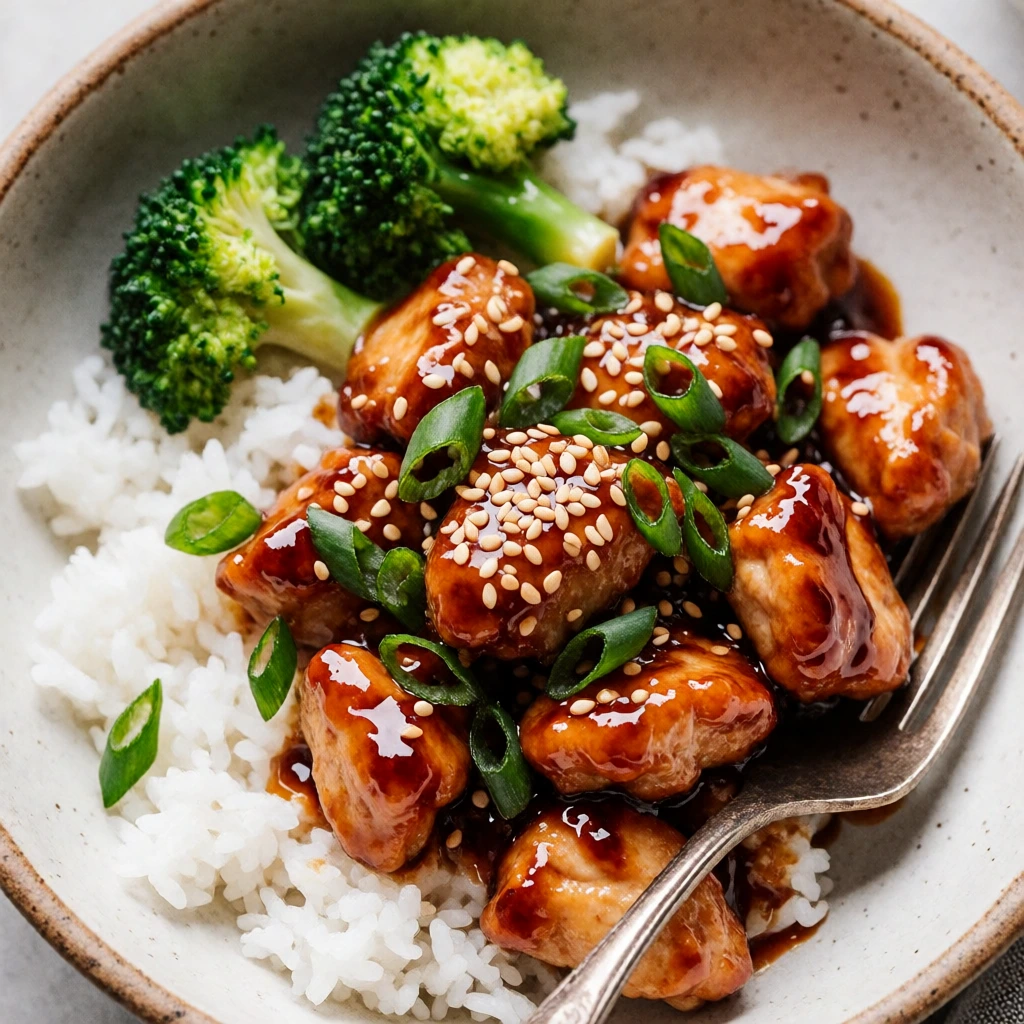
This Sesame Chicken brings together tender golden chicken bites, a glossy sweet-and-savory sauce, fragrant garlic and ginger, toasted sesame seeds, and fresh scallions for a comforting meal inspired by classic Chinese-American takeout. Served over fluffy white rice, every bite combines juicy chicken with rich sesame flavor and a touch of tangy sweetness.
The dish is especially appealing for busy weeknights because it delivers the familiar flavors of takeout in a simple homemade meal. The sauce clings beautifully to the chicken, while the sesame seeds add a delicate nutty crunch and the scallions provide a fresh finish. It can also be customized with chicken thighs, gluten-free tamari, coconut aminos, additional vegetables, or a milder seasoning level depending on your preferences.
Ingredients:
For the chicken:
- 1½ pounds boneless, skinless chicken breast, cut into small cubes
- ½ teaspoon kosher salt
- ½ teaspoon black pepper
- ¼ teaspoon ground ginger
- 1 teaspoon arrowroot or cornstarch
- 1½ tablespoons toasted sesame oil, divided
- 1 tablespoon avocado oil, divided
- ½ teaspoon red pepper flakes
- 1½ tablespoons minced garlic
- 3 cups cooked white rice
- 2 scallions, sliced
For the sauce:
- ⅓ cup reduced-sodium soy sauce or gluten-free tamari
- 3 tablespoons monk fruit sweetener, coconut sugar, honey, or preferred sweetener
- 2 teaspoons tomato paste
- 2½ tablespoons seasoned rice vinegar
- ½ tablespoon toasted sesame oil
- 1 tablespoon sesame seeds, plus extra for garnish
- 1 teaspoon freshly grated ginger
- 1 tablespoon arrowroot or cornstarch
- ¼ cup filtered water
Directions:
- Combine the cubed chicken with salt, black pepper, ginger, arrowroot or cornstarch, and 1 tablespoon of sesame oil. Toss thoroughly until the chicken is evenly coated.
- Heat a large skillet over medium-high heat for about 3 minutes. Add half of the avocado oil and allow it to heat for about 1 minute.
- Add half of the chicken to the skillet in a single layer. Cook for 5–6 minutes, turning halfway through, until golden and cooked through. Avoid overcrowding the pan so the chicken can become nicely crisp.
- Transfer the cooked chicken to a plate and repeat with the remaining avocado oil and chicken.
- In a bowl, combine the soy sauce, sweetener, tomato paste, seasoned rice vinegar, sesame oil, sesame seeds, and grated ginger.
- In a separate small bowl, whisk the arrowroot or cornstarch with the water to create a smooth slurry.
- Add the remaining sesame oil, red pepper flakes, and minced garlic to the skillet. Cook for about 30 seconds, stirring frequently, until fragrant.
- Pour half of the sauce into the skillet and cook for about 1 minute, stirring to incorporate the flavorful bits from the pan.
- Return the chicken to the skillet and toss with the sauce. Add the remaining sauce, then slowly drizzle in the slurry while stirring.
- Cook for approximately 2 minutes, allowing the sauce to thicken and coat the chicken with a glossy finish.
- Serve the sesame chicken over cooked white rice and garnish with sesame seeds and sliced scallions.
Prep Time: 15 minutes | Cooking Time: 20 minutes | Total Time: 35 minutes
Kcal: 513 kcal | Servings: 4 servings
Sesame Chicken: A Flavorful Homemade Takeout Favorite
Sesame Chicken is one of those comforting dishes that makes an ordinary dinner feel a little more special. With tender pieces of chicken coated in a glossy, flavorful sesame sauce and served over warm rice, it combines sweet, savory, tangy, and nutty flavors in every bite. It is inspired by the familiar Chinese-American takeout favorite, but making it at home gives you more control over the ingredients, sweetness, seasoning, and overall texture.
This dish is especially appealing for busy households because it brings together the satisfying flavors of takeout with a relatively simple cooking process. The chicken develops a delicious golden exterior while the sauce becomes thick enough to cling to every piece. Toasted sesame seeds and fresh scallions add texture, color, and a fresh finishing touch.
What Makes Sesame Chicken So Delicious?
The appeal of Sesame Chicken comes from its balance of flavors. The sauce is neither purely sweet nor overwhelmingly salty. Instead, several ingredients work together to create a layered flavor profile.
Soy sauce contributes the savory, salty foundation. Sesame oil adds a distinctive roasted, nutty aroma, while rice vinegar brings brightness and acidity. Ginger and garlic provide warmth and depth, and the sweetener balances the stronger savory flavors. Sesame seeds finish the dish with a subtle crunch and reinforce the characteristic sesame flavor.
The chicken itself provides a neutral, protein-rich base that absorbs the sauce beautifully. When cooked until lightly golden, the exterior develops additional flavor and texture, creating a satisfying contrast with the silky sauce.
A Homemade Alternative to Takeout
One of the biggest advantages of making Sesame Chicken at home is the ability to enjoy a takeout-inspired meal while adjusting it to your preferences. Restaurant versions can sometimes be quite sweet or heavily sauced, whereas a homemade version allows you to determine exactly how intense you want the sauce to be.
You can also adjust the amount of oil, sweetness, spice, and sodium. Reduced-sodium soy sauce or gluten-free tamari can be used when appropriate, while different sweeteners can change the character of the sauce without losing its overall appeal.
Another advantage is freshness. Homemade chicken can be served immediately after cooking, when the meat is tender and the sauce is glossy. Freshly cooked rice, crisp scallions, and toasted sesame seeds make the finished dish feel considerably more vibrant.
Choosing the Best Chicken
Boneless, skinless chicken breast works particularly well for this dish because it cooks relatively quickly and provides lean, tender pieces. Cutting the chicken into evenly sized pieces is important because it helps everything cook at approximately the same rate.
Chicken thighs are another excellent option. They contain more fat than chicken breast and tend to remain particularly juicy and tender during cooking. If you prefer darker meat or want an especially succulent result, boneless, skinless thighs can be substituted.
Regardless of the cut you choose, avoiding overcooking is important. Small chicken pieces cook quickly, so they should be monitored carefully. The goal is chicken that is fully cooked while remaining juicy rather than dry.
The Importance of the Sesame Sauce
The sauce is the defining feature of Sesame Chicken. A good sauce should be flavorful enough to complement the chicken without completely overwhelming it.
Sesame oil plays an important role because it provides the recognizable roasted sesame aroma. Because toasted sesame oil has a strong flavor, a small amount can have a significant impact. It is generally better viewed as a flavoring ingredient rather than simply a cooking oil.
Soy sauce supplies umami and saltiness, while rice vinegar prevents the sauce from becoming overly rich or sweet. Ginger and garlic add aromatic complexity. The combination produces a sauce that tastes much more sophisticated than the individual ingredients might suggest.
A thickener also helps create the characteristic glossy coating. When properly thickened, the sauce should cling to the chicken instead of collecting heavily at the bottom of the plate.
Getting a Beautiful Golden Finish
Texture is an important part of a successful Sesame Chicken. Even though the final dish is covered in sauce, the chicken benefits from developing a lightly browned exterior first.
Cooking the chicken in batches can help prevent overcrowding. When too many pieces are placed into a pan at once, the temperature can drop and moisture can accumulate. Instead of browning, the chicken may begin to steam.
A sufficiently hot pan and enough space between the pieces encourage better browning. This creates flavorful caramelized surfaces that provide a wonderful contrast to the smooth sauce.
The chicken does not need to become deeply fried or heavily crispy. A lightly golden exterior is enough to give the finished dish a more appealing texture.
Balancing Sweet and Savory Flavors
The sweetness of Sesame Chicken can easily be adjusted according to personal preference. Some people enjoy a noticeably sweet sauce, while others prefer a more savory and tangy profile.
The key is balance. Sweetness should complement the salty soy sauce and acidic rice vinegar rather than dominate them. If the sauce tastes too salty, a little additional sweetness or acidity may help balance it. If it tastes overly sweet, a small amount of vinegar can provide contrast.
This flexibility makes the dish particularly convenient for families. You can make the sauce milder for children or add a little heat for adults who enjoy spicy food.
Adding a Touch of Spice
Traditional Sesame Chicken can be served without significant heat, but adding spice is an easy way to personalize it. Red pepper flakes can provide a gentle warmth without changing the basic character of the dish.
For a stronger spicy flavor, you could experiment with chili garlic sauce, fresh sliced chili peppers, or another favorite chili condiment. Start conservatively because it is much easier to increase the heat than to reduce it after the sauce has been prepared.
Spice also works nicely with the sweetness of the sauce. The combination of sweet, savory, tangy, and spicy flavors creates a more complex eating experience.
Why Sesame Seeds Matter
Sesame seeds may appear to be a simple garnish, but they contribute both flavor and texture. Their delicate crunch contrasts with the tender chicken and soft rice.
Toasting sesame seeds can intensify their nutty aroma. Even a small amount sprinkled over the finished dish can make it look and taste more complete.
White sesame seeds provide the classic appearance, while a mixture of white and black sesame seeds can create an attractive presentation. Freshly sliced scallions can also be scattered over the top to introduce a bright green color.
Serving Sesame Chicken
The most natural pairing for Sesame Chicken is steamed white rice. Rice provides a mild background that allows the flavorful sauce to remain the star of the meal.
Brown rice can be used when you prefer a heartier option, while jasmine rice adds an especially fragrant aroma. Cauliflower rice can also be used for those looking for a vegetable-based alternative.
For a complete meal, consider serving the chicken alongside steamed broccoli, snow peas, carrots, bell peppers, bok choy, or green beans. Vegetables add color, texture, and freshness while helping balance the richness of the sauce.
Vegetable Additions and Variations
One of the best features of homemade Sesame Chicken is how easy it is to customize. Vegetables can be incorporated directly into the meal to create a more substantial dinner.
Broccoli is an especially natural pairing because its slightly earthy flavor works well with the sweet and savory sauce. Bell peppers contribute sweetness and color, while snap peas add a fresh crunch.
Carrots, mushrooms, cabbage, zucchini, and baby corn can also work beautifully. If adding several vegetables, try to preserve some of their texture rather than cooking everything until soft.
You can also transform the dish into a colorful rice bowl by arranging the chicken over rice with several vegetables and finishing everything with sesame seeds and scallions.
Making the Dish Gluten-Free
Sesame Chicken can potentially be adapted for a gluten-free diet by choosing gluten-free soy sauce or tamari. However, it is important to check product labels because not all soy sauces are gluten-free.
If preparing the dish for someone with celiac disease or a serious gluten intolerance, attention should also be paid to cross-contact during preparation. Cooking utensils, cutting boards, cookware, and other surfaces should be appropriately cleaned and separated when necessary.
Meal Prep and Leftovers
Sesame Chicken can be convenient for meal preparation because the cooked chicken and rice can be portioned into individual containers.
For the best texture, allow the food to cool appropriately before storing it in the refrigerator. When reheating, adding a small splash of water can help loosen the sauce if it has thickened considerably.
The texture of the chicken may become slightly softer after refrigeration, but the flavor can remain very satisfying. Fresh scallions and sesame seeds can be added after reheating to bring back some freshness and crunch.
When storing leftovers, use appropriate food-safety practices and refrigerate promptly. Reheat portions thoroughly before serving.
How to Make the Dish Feel Restaurant-Worthy
Presentation can make a simple homemade meal look much more impressive. Instead of simply placing everything on a plate, spoon the rice into a neat mound or bowl and arrange the sesame chicken over the top.
Drizzle or spoon a little extra sauce around the chicken rather than flooding the entire plate. Finish with sesame seeds and thinly sliced scallions.
A few colorful vegetables placed alongside the chicken can also create a more attractive presentation. The contrast between the golden-brown chicken, glossy sauce, white rice, green scallions, and colorful vegetables makes the dish especially appealing for food photography.
Tips for the Best Flavor
A few simple considerations can make a noticeable difference in the final result.
Do not overcrowd the pan. Giving the chicken enough space encourages browning instead of steaming.
Use toasted sesame oil for flavor. Its strong aroma is one of the defining characteristics of the dish.
Taste the sauce before finishing the dish. This gives you an opportunity to adjust the balance of sweetness, acidity, saltiness, and spice.
Do not over-thicken the sauce. It should coat the chicken smoothly rather than becoming stiff or gummy.
Add fresh garnishes at the end. Scallions and sesame seeds are most appealing when added shortly before serving.
Serve immediately when possible. The chicken and sauce have their best texture while freshly cooked.
A Great Weeknight Dinner
Sesame Chicken is particularly well suited to weeknight cooking because it feels indulgent without requiring an elaborate meal. The combination of protein, rice, sauce, and optional vegetables creates a satisfying dinner in one convenient meal.
It is also versatile enough to suit different occasions. Serve it as a casual family dinner, prepare it for meal prep, or make it part of an Asian-inspired dinner spread with vegetables, rice, and other side dishes.
The familiar flavors make it approachable for children and adults alike, while the sauce can easily be adjusted to suit different preferences.
Conclusion
Sesame Chicken is a delicious example of how a handful of familiar ingredients can come together to create an incredibly satisfying meal. Tender golden chicken, a glossy sweet-and-savory sesame sauce, fragrant garlic and ginger, toasted sesame seeds, and fresh scallions create a combination that is comforting, flavorful, and easy to customize.
Its versatility is one of its greatest strengths. You can adjust the sweetness and spice, choose chicken breast or thighs, add colorful vegetables, use gluten-free alternatives when appropriate, and serve it with your favorite type of rice. These simple adaptations make it easy to turn the dish into something that fits your household’s preferences.
Whether you are looking for an alternative to takeout, an easy weeknight dinner, or a flavorful meal-prep option, Sesame Chicken is a dependable choice. With its glossy sauce, tender chicken, and irresistible sesame flavor, it is the kind of homemade dinner that can quickly become a regular favorite.