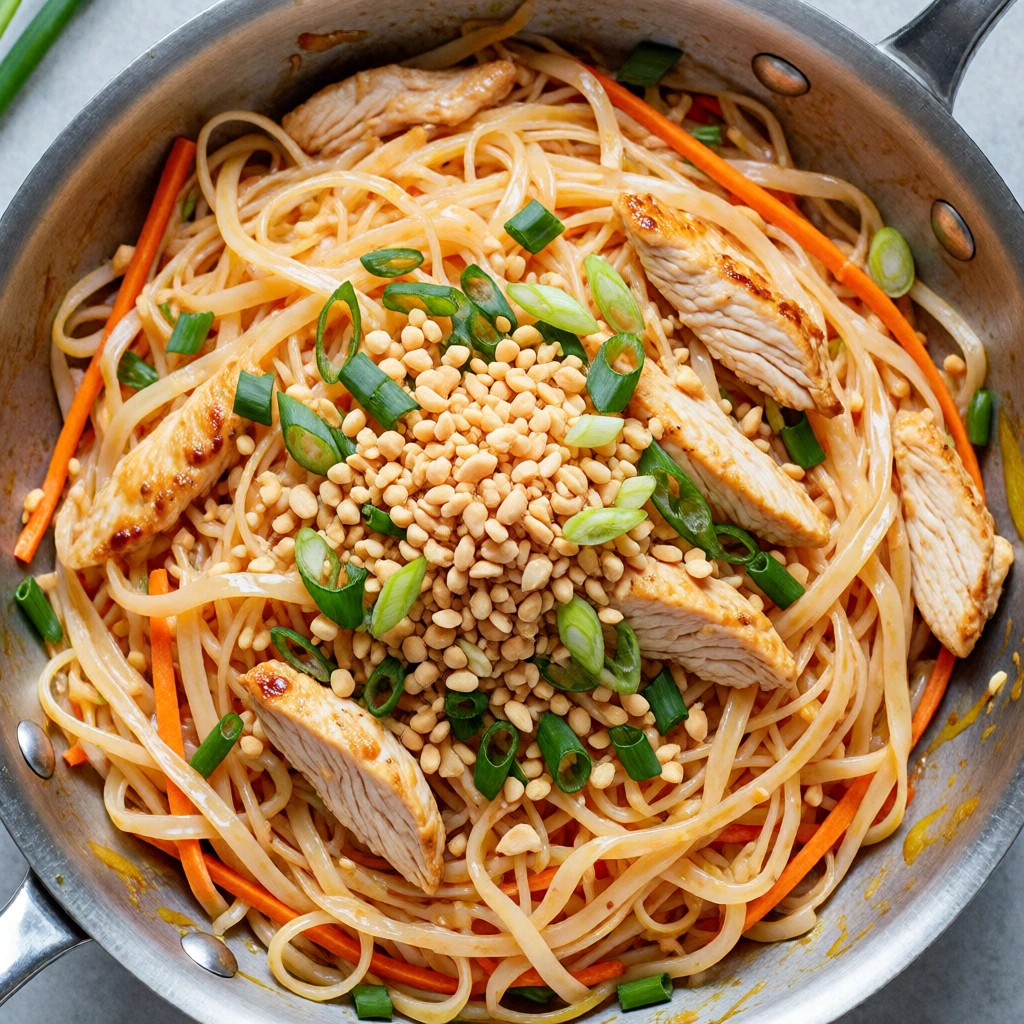
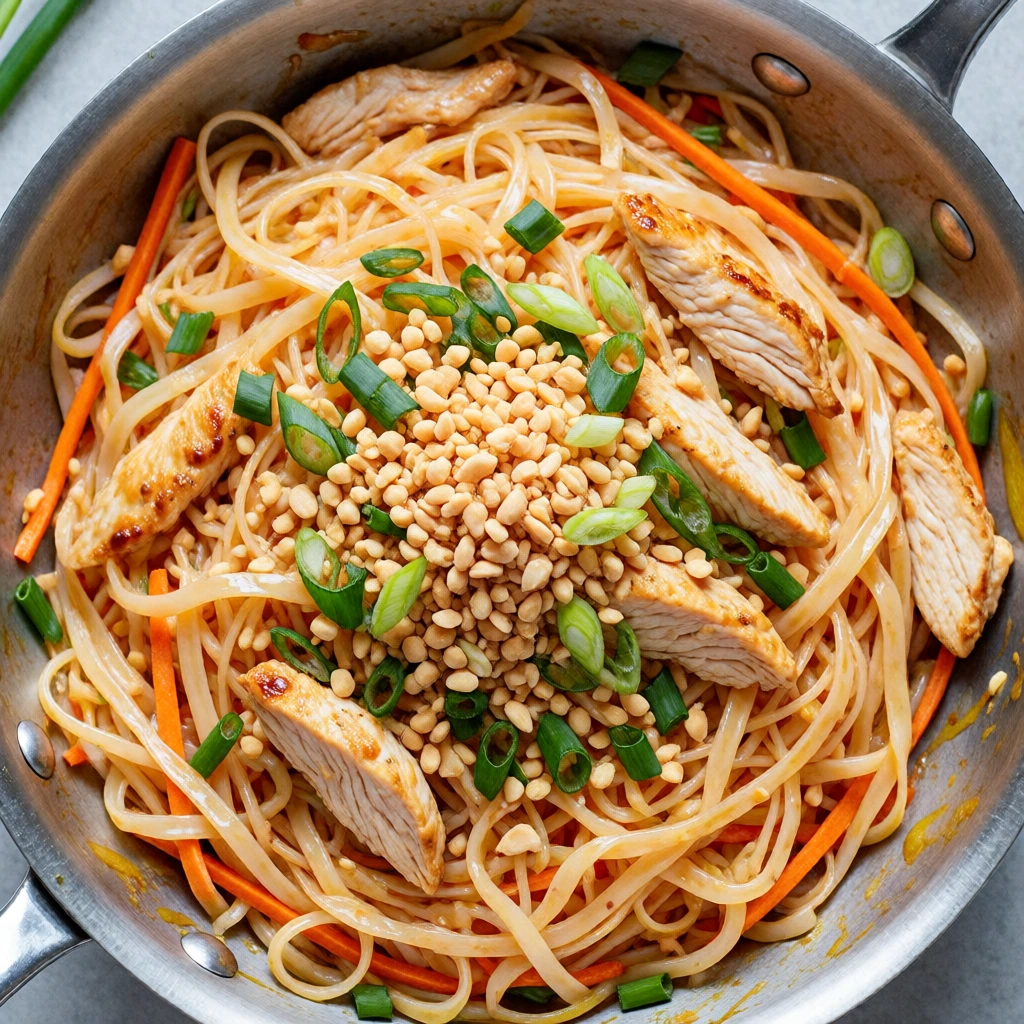
This Chicken Pad Thai combines tender strips of chicken, chewy flat rice noodles, crisp-tender cabbage and carrots, and a vibrant sauce made with soy sauce, fish sauce, fresh lime juice, and honey. Finished with scrambled egg, green onions, and roasted peanuts, every bite delivers a delicious balance of savory, tangy, sweet, and nutty flavors.
Perfect for busy evenings, this homemade dish brings colorful Thai-inspired flavors to the dinner table without requiring hours in the kitchen. The noodles soak up the flavorful sauce while the vegetables retain just enough crunch to create an irresistible contrast in texture. Serve it fresh from the skillet for a satisfying meal that is just as enjoyable for family dinners as it is for casual entertaining. The source recipe specifies a 20-minute preparation-to-finish time and an eight-serving yield.
Ingredients:
- 1 pound flat rice noodles
- 3 tablespoons toasted sesame oil
- 1 tablespoon coconut oil
- 1 medium onion, diced
- 1 pound boneless, skinless chicken breast, sliced into thin strips
- 3–5 cloves garlic, finely minced
- 1 tablespoon ground ginger
- 8 ounces thinly sliced green cabbage
- 1 cup shredded carrots
- ⅓ cup low-sodium soy sauce
- ¼ cup fish sauce
- ¼–⅓ cup freshly squeezed lime juice
- 2 tablespoons honey or agave syrup
- 1 large egg, scrambled
- 2 tablespoons sriracha, optional
- 3 green onions, thinly sliced
- ⅔ cup chopped roasted peanuts
Directions:
- Cook the rice noodles according to the package directions. Drain, rinse thoroughly under cold water, and set aside.
- Heat the sesame oil and coconut oil in a very large, deep skillet over medium-high heat.
- Add the diced onion and sauté for about 5 minutes, stirring occasionally, until it begins to soften.
- Add the sliced chicken and cook for about 3 minutes, stirring and turning frequently, until the chicken is cooked through.
- Add the garlic and ground ginger. Cook for about 1 minute, stirring constantly, until fragrant.
- Add the cabbage, shredded carrots, soy sauce, fish sauce, and lime juice. Stir everything together.
- Cover the skillet, reduce the heat to medium-low, and simmer for about 3 minutes, or until the cabbage softens.
- Remove the lid and stir in the honey or agave syrup.
- Add the cooked noodles and turn off the heat. Toss thoroughly until the noodles are coated with the flavorful sauce.
- Stir in the scrambled egg and optional sriracha.
- Garnish generously with sliced green onions and chopped roasted peanuts.
- Serve immediately while warm, with extra lime or sriracha if desired.
Prep Time: 5 minutes | Cooking Time: 15 minutes | Total Time: 20 minutes
Kcal: 510 kcal | Servings: 8 servings
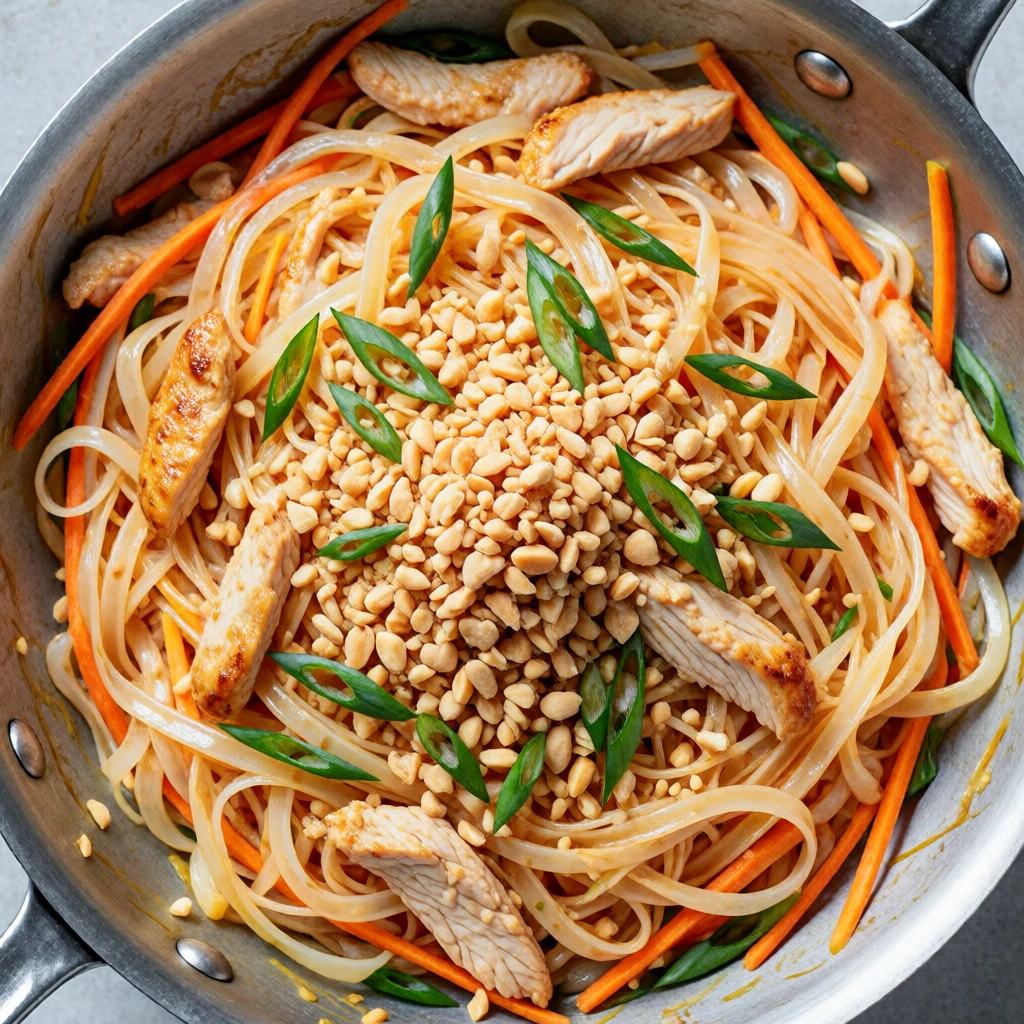
Chicken Pad Thai: A Flavorful Thai-Inspired Noodle Dinner
Chicken Pad Thai is one of those meals that brings together everything you want in a satisfying dinner: tender chicken, soft and chewy rice noodles, crisp vegetables, savory sauce, fresh citrus, creamy egg, and crunchy peanuts. It is colorful, flavorful, comforting, and surprisingly easy to prepare at home.
This Thai-inspired noodle dish is especially appealing when you are craving restaurant-style food but want something homemade. Instead of ordering takeout, you can create a generous skillet of noodles filled with contrasting flavors and textures. The combination of savory, sweet, tangy, and slightly spicy flavors makes every bite interesting.
What makes this version particularly convenient is its quick preparation time. With the right preparation, the entire meal can come together in about 20 minutes, making it an excellent choice for busy weeknights, casual family dinners, or whenever you want a flavorful meal without spending hours in the kitchen.
What Is Chicken Pad Thai?
Pad Thai is a popular Thai noodle dish traditionally made with stir-fried rice noodles and a combination of savory, sweet, sour, and salty flavors. Chicken is one of the most popular proteins used in modern versions, although Pad Thai can also be prepared with shrimp, tofu, beef, or other proteins.
The defining feature of Pad Thai is its balance. Rather than relying on one dominant flavor, the sauce combines several taste elements to create a more complex result. Citrus provides brightness, savory ingredients contribute depth, and a touch of sweetness rounds everything out.
This chicken version also includes vegetables, egg, green onions, and roasted peanuts. Together, these components create a dish that feels hearty enough for dinner while still having plenty of fresh and vibrant elements.
Why You Will Love This Homemade Version
There are plenty of reasons to add Chicken Pad Thai to your regular dinner rotation.
First, it is fast. The dish can be prepared in roughly 20 minutes, which makes it practical for evenings when you do not have much time to cook.
Second, it is incredibly flavorful. The sauce combines salty, tangy, savory, and sweet notes, while fresh lime adds brightness. Optional sriracha can provide a pleasant kick for anyone who enjoys spicy food.
Another advantage is the texture. The soft rice noodles are paired with tender chicken, lightly cooked vegetables, fluffy egg, and crunchy peanuts. That combination keeps the dish from feeling one-dimensional.
Finally, Chicken Pad Thai is easy to customize. You can adjust the spice level, change the vegetables, substitute the protein, or add additional toppings according to your preferences.
The Flavor Profile
The appeal of Chicken Pad Thai comes largely from its balance of flavors.
The savory component provides the foundation of the dish, while fish sauce contributes the characteristic depth associated with many Thai-inspired noodle dishes. Fresh lime juice adds acidity and brightness, preventing the sauce from becoming too heavy.
A small amount of honey or another sweetener helps balance the salty and sour elements. When these flavors come together, the result is a sauce that is rich but lively rather than simply salty or sweet.
Sriracha can be added when a little heat is desired. The amount can easily be adjusted depending on your preference. If you are serving the meal to children or guests with different spice tolerances, keeping the sauce mild and offering hot sauce separately is an easy solution.
The Importance of Rice Noodles
Rice noodles are an essential part of the character of Pad Thai. Their delicate chewiness allows them to absorb the surrounding sauce while still maintaining enough structure to provide a satisfying bite.
The noodles should be cooked according to their package instructions and handled carefully. Overcooked rice noodles can become soft and sticky, while properly cooked noodles maintain a pleasant texture when tossed with the sauce.
Rinsing the cooked noodles under cold water can also help prevent excessive sticking before they are incorporated into the skillet.
When the noodles meet the warm sauce, they absorb some of its flavor. This is what helps transform plain rice noodles into a flavorful centerpiece for the dish.
Choosing the Right Chicken
Boneless, skinless chicken breast works particularly well because it cooks quickly and is easy to slice into thin strips. Cutting the chicken into relatively uniform pieces helps it cook evenly.
Chicken thighs can also be used if you prefer darker meat. Thigh meat tends to be more forgiving and can remain particularly juicy during cooking.
Regardless of which cut you choose, avoid overcrowding the skillet. When too much chicken is added to a pan at once, it can release moisture and begin steaming instead of developing the desirable cooked exterior.
Thinly sliced chicken is especially useful for a quick recipe because it reduces cooking time while allowing the chicken to become thoroughly coated with the flavorful sauce.
Adding Vegetables for Color and Texture
Vegetables do more than make the dish look colorful. They also contribute freshness and texture.
Cabbage adds a pleasant tender-crisp bite, while shredded carrots provide subtle sweetness and vibrant color. Green onions add a fresh finishing note that works especially well with the savory sauce and roasted peanuts.
One of the benefits of making Pad Thai at home is that you can adapt the vegetable selection. Bean sprouts, bell peppers, broccoli, snap peas, or thinly sliced mushrooms can work well depending on what you have available.
The key is to avoid adding so many vegetables that the noodles become secondary. Pad Thai works best when the noodles remain the main component and the vegetables complement them.
Why Fresh Lime Makes a Difference
Fresh lime juice plays an important role in balancing the richness of the dish.
The acidity cuts through the savory sauce and helps brighten the noodles, chicken, and vegetables. It also creates contrast against the roasted peanuts and egg.
For the best flavor, freshly squeezed lime juice is preferable to bottled lime juice. The fresh citrus aroma adds another layer to the finished dish.
You can also serve extra lime wedges at the table. This allows everyone to adjust the acidity according to personal preference.
The Role of Peanuts
Roasted peanuts are more than a garnish. They provide one of the most important textural contrasts in the dish.
The noodles and vegetables are relatively soft, while the peanuts provide a crisp, crunchy element. Their roasted, nutty flavor also complements the savory and slightly sweet sauce.
For the best texture, add the peanuts near the end rather than allowing them to sit in the sauce for too long. This helps them retain their crunch.
If you have a peanut allergy, toasted cashews can provide a similar crunchy element, although the flavor will be different.
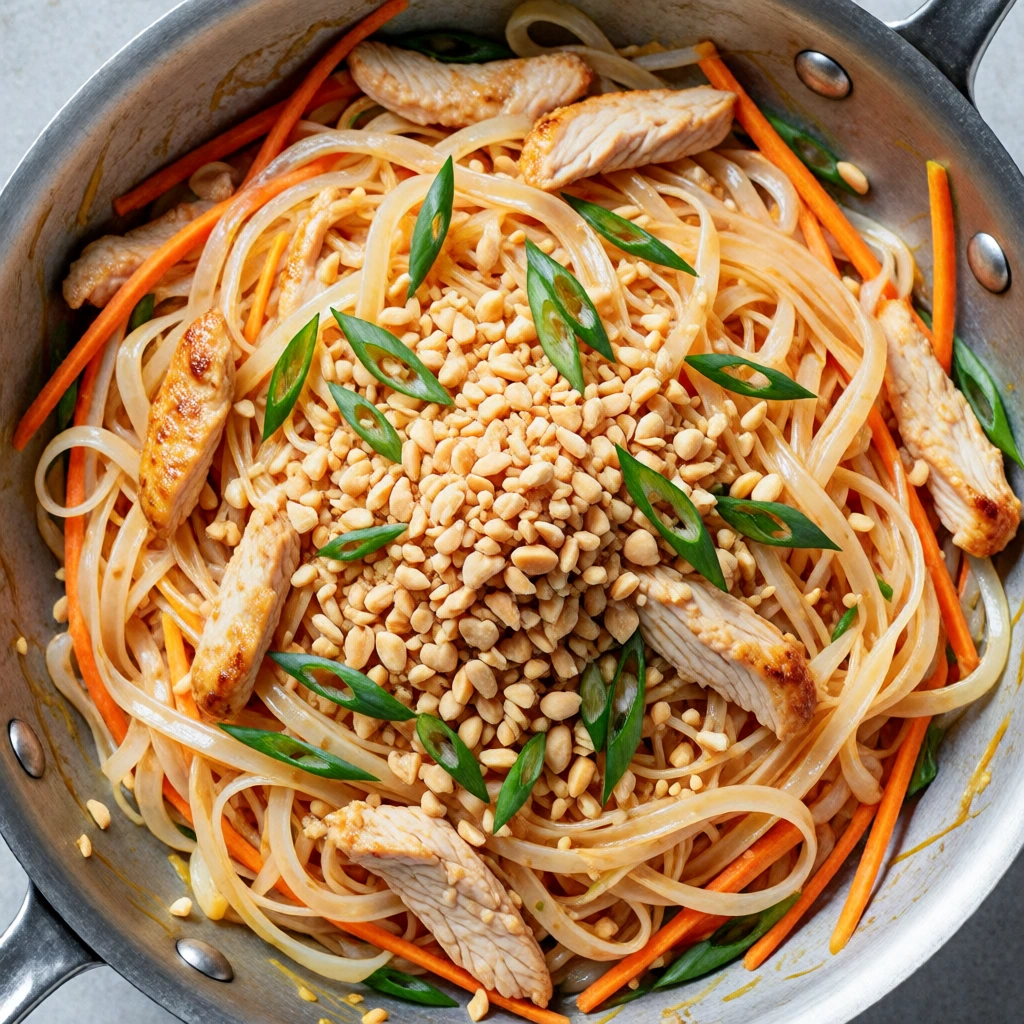
How to Control the Spice Level
Chicken Pad Thai can easily be made mild, medium, or spicy.
Sriracha is an easy way to introduce heat because you can control the quantity. For a mild family-friendly version, use very little or leave it out entirely.
For those who enjoy spicy food, additional sriracha can be served alongside the finished noodles. Crushed red pepper flakes or another preferred chili sauce can also be used.
Keeping the base dish moderately seasoned and allowing diners to add heat individually is often the best approach when serving a group.
How to Make the Dish Taste More Like Takeout
The secret to restaurant-style noodles is not simply adding more sauce. It is about creating balance and making sure the noodles, chicken, vegetables, and toppings work together.
Use a large skillet or wok so the ingredients have enough room to cook properly. A crowded pan can make the ingredients steam rather than stir-fry.
High or medium-high heat is useful for developing flavor quickly, but it is important to keep an eye on the ingredients so the garlic and other delicate components do not burn.
Another important factor is timing. Have your ingredients prepared before you begin cooking. Because the dish cooks quickly, there is little time to stop and measure ingredients once everything is in the skillet.
Fresh toppings also make a noticeable difference. Green onions, roasted peanuts, lime, and optional chili sauce give the finished dish a fresh, restaurant-style presentation.
Customizing Chicken Pad Thai
One of the best things about homemade Pad Thai is its versatility.
You can replace the chicken with shrimp for a seafood variation or use tofu for a vegetarian-inspired version. Thinly sliced beef can also be used if you prefer a richer protein.
Vegetables can be adjusted based on what is in your refrigerator. Bell peppers, bean sprouts, broccoli, snow peas, and mushrooms are all possibilities.
You can also modify the sweetness and acidity of the sauce. If you prefer a tangier dish, increase the lime component slightly. If you enjoy sweeter flavors, a little additional honey can be used.
For more heat, increase the chili sauce. For a milder version, simply omit it.
What to Serve with Chicken Pad Thai
Chicken Pad Thai is substantial enough to serve as a complete meal by itself. However, it can also be paired with simple side dishes when you are serving a larger dinner.
Fresh cucumber slices make a refreshing accompaniment because their cool, crisp texture contrasts with the warm noodles.
A simple green salad with a light dressing can also work well. The fresh vegetables provide contrast without making the meal excessively heavy.
For a larger Thai-inspired spread, you could serve the noodles alongside spring rolls, fresh vegetables, or a light soup.
Because Pad Thai already contains noodles, protein, vegetables, and toppings, it is generally best to keep side dishes relatively light.
Serving and Presentation Tips
Presentation can make a simple noodle dinner feel much more special.
Serve the Chicken Pad Thai while it is still warm. Arrange it in a large serving bowl or individual bowls, then finish with sliced green onions and chopped roasted peanuts.
A lime wedge placed beside each serving adds both visual appeal and practical flavor. Diners can squeeze fresh lime over the noodles immediately before eating.
For a colorful presentation, make sure some of the carrots, green onions, and peanuts remain visible on top instead of being completely mixed into the noodles.
A small amount of sriracha can also be served on the side for guests who want additional heat.
Common Mistakes to Avoid
One common mistake is overcooking the noodles. Rice noodles can become soft quickly, so always follow the package instructions carefully.
Another mistake is using a skillet that is too small. The ingredients need enough room to move around. A large, deep skillet makes tossing the noodles much easier.
It is also important not to burn the garlic. Garlic cooks quickly, and burnt garlic can introduce a bitter flavor to the entire dish.
Adding too much sauce at once can also make the noodles overly wet. The goal is to coat the noodles thoroughly without leaving a large amount of liquid at the bottom of the skillet.
Finally, do not forget the finishing toppings. The green onions, peanuts, and lime help provide the contrast that makes the finished dish feel complete.
Making Chicken Pad Thai Ahead of Time
Chicken Pad Thai is best enjoyed fresh, but it can be prepared ahead when necessary.
If you are planning meals for the week, allow the finished noodles to cool before transferring them into airtight containers. Store them in the refrigerator and consume them within a few days.
When reheating, a skillet is often preferable to a microwave because it allows the noodles to warm evenly. A small splash of water can help loosen the noodles if they have become dry.
Fresh toppings such as peanuts and green onions are best added after reheating rather than before storage. This helps preserve their texture and freshness.
Storage Tips
Leftover Chicken Pad Thai should be refrigerated promptly in a sealed container.
Because rice noodles can absorb sauce as they sit, leftovers may become slightly firmer or drier than the freshly prepared dish. This is normal and can usually be corrected during reheating with a small amount of moisture.
For the best quality, enjoy leftovers within a few days.
If you know you will have leftovers, consider keeping crunchy toppings separate. Adding freshly chopped peanuts and green onions just before serving can make reheated noodles taste much fresher.
Why This Is a Great Weeknight Dinner
Busy evenings often require meals that are quick without sacrificing flavor. Chicken Pad Thai fits that need particularly well.
The dish uses a single large skillet, cooks quickly, and combines several food groups into one satisfying meal. There is no need to prepare a complicated side dish just to make dinner feel complete.
It is also a useful recipe for households with different preferences because the spice level and toppings can be adjusted individually.
Most importantly, the finished dish feels special. Even though it can be prepared quickly, the combination of colorful vegetables, glossy noodles, tender chicken, fresh lime, and crunchy peanuts creates the impression of a meal that took much longer to prepare.
Tips for the Best Results
For consistently delicious Chicken Pad Thai, keep a few principles in mind.
Prepare everything before turning on the stove. The cooking process moves quickly, so having the chicken, vegetables, sauce components, noodles, and toppings ready will make the process smoother.
Use a large skillet and avoid overcrowding. This helps the ingredients cook efficiently and prevents excessive steaming.
Do not overcook the rice noodles. They should remain pleasantly chewy rather than soft and mushy.
Taste and adjust the balance before serving. Depending on the specific brands of sauces you use, you may find that the dish needs a little more lime, sweetness, or spice.
Finally, finish the dish with fresh toppings. Peanuts, green onions, lime, and optional chili sauce provide the final layer of flavor and texture.
Conclusion
Chicken Pad Thai is a flavorful, colorful, and practical homemade dinner that brings together tender chicken, chewy rice noodles, fresh vegetables, egg, roasted peanuts, and a beautifully balanced Thai-inspired sauce.
Its combination of savory, sweet, tangy, and spicy flavors makes it much more exciting than an ordinary noodle dinner, while its quick preparation makes it realistic for busy weeknights. The recipe is also flexible enough to accommodate different proteins, vegetables, and spice preferences.
Whether you are cooking for your family, preparing a casual dinner for friends, or simply craving a satisfying bowl of homemade noodles, Chicken Pad Thai is an excellent choice. Serve it warm with plenty of fresh lime, green onions, and crunchy peanuts for a meal that delivers restaurant-inspired flavor right from your own kitchen.